Trains tickets in France


Autumn sale fares, 9 to 14 September 2026
Eurostar and SNCF TRAINDAYS fares are reduced for one week only, from 9 to 14 September 2026. Eurostar Standard class fares start at €25, and international TGV fares start at €39 in second class. Travel dates differ by carrier: Eurostar tickets are valid from 23 September to 16 December 2026, and TRAINDAYS tickets from 3 November to 12 December 2026. There is no code to enter. The reduced fare is already applied in your search results. Sale fares are non-refundable and non-exchangeable.
Trains in France

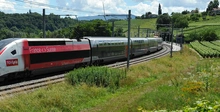
France was made for rail. High-speed lines stitch the headline cities together in a few hours. Regional routes wander through vineyard valleys, seaside towns and storybook squares. You board in the centre of one place, step off in the centre of the next, and the journey in between is part of the joy. With Rail Europe you can plan routes, compare prices and book in a few clicks, then let the view do the work.
Dream big, live slow is the mood. This guide helps you do both. Take fast trains when time matters. Choose slower routes when you want to savour. Don’t just go. Explore France and savour it.
France in two tempos
France by rail offers fast when you need it, slow when you want it.
High speed for the headliners
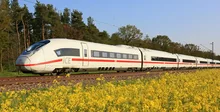
TGV INOUI links Paris with Lyon, Marseille, Bordeaux, Strasbourg and more at up to 300 km/h. It turns long distances into long lunches. Eurostar adds direct connections to London. TGV Lyria reaches Geneva and Lausanne. Frecciarossa crosses to Turin and Milan. Renfe AVE heads for Barcelona and beyond. If your time is tight, high speed wins.
Regional and night trains for the good kind of slow
TER regionals weave into coastal towns, market squares and small stations where the minutes stretch. Intercités de Nuit lets you board in the evening and wake up in the south or the Alps, rested and ready. Slow travel gives you street time, not transfer time.
Train companies in France

Welcome aboard France. Fast for the big jumps, unhurried for the lovely bits. With Rail Europe you can book the main SNCF services across the country plus the international trains that carry you smoothly over the border. Below is a clear look at what each train is like, where it runs, the classes on board, how reservations work and when to choose it. Think of it as your shortcut to picking the right train for the trip you have in mind.
Domestic SNCF services
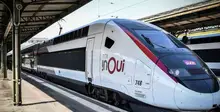
TGV INOUI (high speed)
France’s flagship rail service, reaching up to 300 km/h between headline cities, with easy connections to regional lines.
Where it runs: Paris to Lyon, Marseille, Bordeaux, Strasbourg, Lille and more
Classes: Standard and First. First means extra space and a calmer feel
On board: Air-conditioning, power at most seats, big luggage racks, café-bar on many routes, Wi-Fi on many core lines
Reservations: Required. You choose your seat when you book
Best for: Fast city links that turn long distances into day trips
Intercités (long-distance day trains)
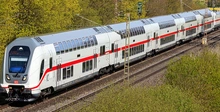
Comfortable intercity services on corridors without a high-speed line.
Where it runs: Examples include Bordeaux to Marseille, Toulouse to Clermont-Ferrand and cross-country links in the Massif Central
Classes: Second and First on many routes
On board: Reserved seats, roomy carriages, overhead and end-of-coach luggage space, simple snacks on some services
Reservations: Usually required
Best for: Direct long routes off the high-speed grid and scenic journeys
Intercités de Nuit (night trains)
Sleep while the countryside slips by. Board in the evening, wake up by the sea or in the mountains.
Where it runs: Year-round and seasonal routes such as Paris to Nice, Briançon and Toulouse, plus services into the Pyrénées
Sleeping options: 6-berth couchettes in Second and 4-berth couchettes in First on most routes. Mixed and women-only compartments on selected services
On board: Bedding provided, reading lights, space for bags in the compartment
Reservations: Required and included with your berth
Best for: Saving daylight and a hotel night on long cross-country trips
TER (regional trains)
Local lines that do the lovely bits. Great for day trips to villages, vineyards and coastlines.
Where it runs: Nationwide, with dense networks in Provence-Alpes-Côte d’Azur, Auvergne-Rhône-Alpes, Grand Est and Nouvelle-Aquitaine
Classes: Usually one class
On board: Modern low-floor trains on many lines, bike spaces on numerous services. Facilities vary by region
Reservations: Not required in most cases. Buy a ticket, hop on, find a window
Best for: Short hops, spontaneous stops and slow-travel days
International services
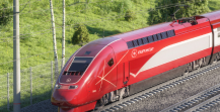
Eurostar
High-speed connections through the Channel Tunnel.
Where it goes: Paris and Lille to London, with onward combinations into Belgium and the Netherlands
Classes: Standard, Standard Premier and Business Premier
On board: Comfortable seating, power at seat, café-bar
Reservations: Required and included
Best for: Easy weekends in London or multi-country itineraries
TGV Lyria
Fast, frequent links between France and Switzerland.
Where it goes: Paris to Geneva, Lausanne and Zurich
Classes: Standard, Standard 1ère and Business 1ère on many trains
On board: Power, Wi-Fi on many services, café-bar
Reservations: Required and included
Best for: Seamless France–Switzerland trips with premium comfort options
DB and SNCF TGV or ICE
Direct cross-border services into Germany.
Where it goes: Paris and Strasbourg to Frankfurt, Stuttgart and Munich
Classes: Second and First
On board: Power at seats, generous luggage space, bistro or café on many services
Reservations: Recommended or required depending on the train
Best for: Fast France–Germany city pairs
Renfe AVE
Mediterranean high speed to Spain.
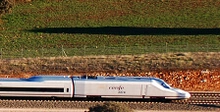
Where it goes: Lyon or Marseille to Barcelona, with selected links onward to Madrid
Classes: Economy and Comfort
On board: Modern interiors, power at seat, café-bar on many services
Reservations: Required and included
Best for: Blending the Riviera with Catalonia in one trip
Trenitalia Frecciarossa
A stylish and convenient option to Italy and for certain domestic French connections.
Where it goes: Paris, Marseille and Lyon to Turin and Milan
Classes: Standard, Business, Premium and Executive
On board: Quiet coaches, power at seat, sleek bistro
Reservations: Required and included
Best for: France–Italy journeys with multiple comfort tiers
Train stations in France
Paris
Gare du Nord
Europe’s busiest rail hub and your gateway to northern France and the UK. Trains run to Lille, Amiens and coastal towns, with high-speed links to London plus services into Belgium and the Netherlands. The Metro and RER under the concourse make cross-city connections simple. Allow extra time for international departures.
Gare de l’Est
Steps from Gare du Nord, this station serves Champagne, Lorraine and Alsace, including Reims, Nancy and Strasbourg. It is smaller and easy to navigate, which makes tight changes less stressful.
Gare de Lyon
The launch point for Lyon, Dijon, the Alps and the Mediterranean. TGVs head to Lyon, Marseille, Nice and Italy, with frequent TER and Intercités connections into Burgundy and Provence. Clear departure halls and plenty of food options.
Gare Montparnasse
Trains to Brittany and the Atlantic west, including Rennes, Quimper and La Rochelle. Spacious concourses, clear signage and good facilities. Handy for swift getaways to the coast.
Gare Saint-Lazare
Normandy’s home base, serving Rouen, Caen, Deauville and Le Havre. The modernised concourse connects directly to shops and the Metro. Frequent departures make day trips easy.
Gare d’Austerlitz
Gateway to parts of the south-west and several night-train departures. Quieter than other Paris hubs with straightforward platforms. Handy if you are taking Intercités de Nuit.
Paris Bercy
A compact station used by some Intercités and TER services, especially towards Burgundy and Auvergne. Fewer amenities than the big six but quick to get around.
Regional hubs
Lille Europe and Lille Flandres
Two stations a short walk apart. Lille Europe handles most high-speed services including Paris, London and Brussels. Lille Flandres serves regional TER lines across Hauts-de-France. The pairing makes cross-border trips and local day outings simple.
Lyon Part-Dieu
The main Lyon hub with fast links to Paris, the Alps and the south. Easy connections to TER services for Annecy, Grenoble and small lake towns. Located beside a large shopping centre for last-minute supplies.
Marseille Saint-Charles
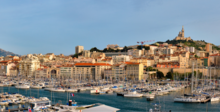
A grand hilltop station for Provence and the Riviera. TGVs to Paris and Lyon, TERs along the coast to Cassis, La Ciotat and Toulon. The famous staircase drops you into the city in minutes.
Bordeaux Saint-Jean
Your door to the Atlantic south-west. High-speed trains to Paris and regional lines to Arcachon, the Médoc and the Basque coast. Light, airy concourse and simple platform layout.
Strasbourg
Base for Alsace and Germany. Fast trains to Paris and Germany, TERs to Colmar, Mulhouse and wine-route towns. Canals and the cathedral square lie a short tram ride away.
Nice Ville
Centre-of-town access to the Côte d’Azur. Frequent locals to Antibes, Cannes, Menton and Monaco, with longer-distance links to Marseille and Italy. A classic Riviera feel and plenty of cafés nearby.
Other useful stations at a glance
Avignon TGV, Avignon Centre, Aix-en-Provence TGV, Valence TGV, Grenoble, Annecy, Dijon Ville, Reims, Metz, Nancy, Rouen Rive Droite, Caen, Le Havre, Tours, Saumur, Angers Saint-Laud, Nantes, Rennes, La Rochelle, Poitiers, Toulouse Matabiau, Montpellier Saint-Roch, Nîmes, Perpignan, Bayonne, Biarritz, Saint-Jean-de-Luz, Pau, Lourdes, Cannes, Antibes, Menton.
How to travel through French stations
Arrive with a little buffer
For domestic trips aim for 20 to 30 minutes before departure, especially at big hubs or with children and larger bags. For Eurostar and other international trains arrive earlier as check-in and border controls apply.
Find your train on the boards
Look for Départs. You will see the destination, departure time and train number. Platforms appear close to departure, often 15 to 20 minutes before. Follow the platform signs marked Voie.
Read your ticket
Your carriage is Voiture and your seat is Place. Match the carriage number on the platform screens to board the right section. Keep your e-ticket handy for on-board checks.
Connections in Paris
Some changes are station-to-station. Gare du Nord to Gare de l’Est is a short signed walk. Cross-city changes use the Metro or RER. Build in time if you are moving between non-adjacent stations like Montparnasse and Lyon.
Validation and gates
Most TGV, Intercités and international trains use ticket gates or on-board checks.
Luggage
There is no formal weight limit. Bring what you can carry and keep bags with you. Use overhead racks for small items and racks at carriage ends for larger cases. Trolleys and lifts are available in most large stations.
Food and facilities
Pick up snacks from station bakeries or markets, or use the café-bar on most high-speed trains. Toilets are signed as Toilettes. Left-luggage lockers, marked Consignes, are available at many major stations.
Accessibility
Most TGVs have accessible spaces and accessible toilets. Many TER trains are low-floor. At stations look for lifts and ramps. Staff can arrange assistance if booked in advance.
Popular train routes
Paris to Lyon
On TGV INOUI you cruise from the capital to France’s food city in roughly two hours. It is an easy base for riverside walks, traboules and markets, with frequent departures from Paris Gare de Lyon to Lyon Part-Dieu. For a quiet detour, take a short TER to Pérouges, a walled village that feels time-stopped.
Paris to Marseille
High speed turns Paris to Mediterranean in a single sit-down, arriving at Marseille Saint-Charles above the Old Port. Use local TERs along the Côte Bleue to reach small stations like Niolon for sea cliffs and quiet paths. If you want calmer coaches and extra space, book First.
Paris to Bordeaux
This is a fast hop to grand squares and riverside cycling, with seat power and a café-bar on many trains. From Bordeaux, TERs reach Arcachon in under an hour for oyster villages and the Dune du Pilat by local bus. It is a simple city break that doubles as a seaside escape.
Paris to Strasbourg
From Gare de l’Est, TGV INOUI carries you to canals, timbered houses and cathedral views in under two hours. Day trips are easy on TERs to Colmar and Mulhouse. If you like a slower day, rent a bike for flat rides to vineyard towns such as Eguisheim.
Paris to Nice
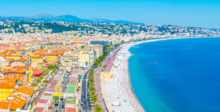
Arrive in the heart of the Riviera with palm-lined promenades and pastel old towns. Many services are direct, some change in Marseille. Use frequent TERs for easy swim stops in Villefranche-sur-Mer or Antibes.
Paris to Reims
High speed runs you from Gare de l’Est to Reims in under an hour, swapping boulevards for cathedral spires and Art Deco streets. The centre is compact and walkable, with calm canal paths for an easy loop before your return.
Paris to Rouen
From Saint-Lazare it is a straightforward ride to half-timbered lanes, a soaring cathedral and riverside walks. If you have time, continue by TER to Le Havre for modernist seafront architecture and the MuMa art museum.
Paris to Rennes
TGV gets you to Brittany quickly, then a short TER puts you on Saint-Malo’s ramparts for sea air and big skies. Rennes itself is a lively base with markets and half-timbered squares if you prefer to linger.
Classic coastal routes
Nice to Menton
Windows fill with sea and cliffs as the local rattles through tunnels and pastel stations. No reservations needed, just buy a ticket and board. Break the ride at Villefranche-sur-Mer for a harbour stroll and a short shoreline walk.
Marseille to Cassis or Marseille to La Ciotat
Short rides deliver big Mediterranean views and access to calanques and coves. Trains run all day from Saint-Charles. Start early in warmer months for cooler hiking, or enjoy quieter trails in shoulder season.
La Rochelle to Rochefort
A gentle Atlantic shuttle joins two towns with rich maritime heritage. Trains are frequent and platforms are simple to navigate. In Rochefort, the Corderie Royale and riverside paths make for an unhurried afternoon.
Marseille to Nice
A simple sweep along the Riviera lands you on palm-lined promenades and pastel old towns. Break the journey in Antibes or Cannes for harbourside walks, then carry on when you are ready.
Bordeaux to Biarritz or Bordeaux to Saint-Jean-de-Luz
Trains head for the Basque coast where promenades meet surfing beaches and old fishing quays. Hop off in Guéthary for clifftop cafés and quieter coves, then continue down the line.
Countryside and slow gems
Strasbourg to Colmar
This easy canal-to-canal day trip puts vineyards on your doorstep. Trains are frequent and reservations are not required.
Toulouse to Albi
A compact hop delivers you to the Tarn, red-brick skylines and quiet museums. Services run direct from Toulouse Matabiau to Albi-Ville. Head to the river walks below the cathedral for calm views.
Clermont-Ferrand to Nîmes
The Cévennes line is a slow classic across viaducts and deep valleys. It is longer than the fast roads but far more scenic. Pick a daylight departure, sit by the window and bring snacks.
Nîmes to Avignon
Two Provençal bases sit half an hour apart with links into wine country and Roman sights. There are two Avignon stations, Avignon Centre in town and Avignon TGV outside with shuttle links. Plan your arrival to match the station you need.
Bordeaux to Arcachon
Pine forests, dunes and an easy seaside break from the city are all on a frequent local. Trains run year-round and take under an hour. Connect by bus to the Dune du Pilat and wander village lanes on foot.
Paris to Bayeux
This route delivers a handsome old town and direct access to the D-Day coast. Base yourself near the tapestry museum and use local buses or tours for Omaha Beach and the American Cemetery.
Rail Passes
France rail passes
The best way to see the most of France is with a rail pass. Read on for more details.
Passes: Eurail and Interrail in France
When a pass is best
Passes are super savers when you plan several regions or countries in one trip, you value flexibility over fixed times, or you love regional lines where you can hop on and go.
Reservations with a pass
Seat reservations and a small fee are required on many fast or long-distance trains. TER regional trains usually do not need reservations.
Requires reservation: TGV INOUI, Intercités services with compulsory reservations, Eurostar, TGV Lyria, DB–SNCF TGV or ICE, Renfe AVE, Trenitalia Frecciarossa and Intercités de Nuit.
Usually no reservation: TER regional trains.
Choosing a pass
A Eurail/Interrail Global Pass is likely the best option if you are crossing borders into Spain, Italy, Germany or Switzerland. A France One Country Pass works well if you want to go deeper within France without locking into exact trains.
Travelling to and from France
France is a natural springboard. High-speed links take you from city centre to city centre across the Channel and over the Alps, with easy connections onward. Here is how to pair France with its neighbours, plus a few planning tips to keep things smooth.
United Kingdom — Eurostar
Where you go: Paris and Lille to London St Pancras.
Why it’s great: no airports, no transfers, just centre to centre in one comfortable ride with power sockets and a café-bar on board.
How to book: all Eurostar services require a seat reservation, which is included with your ticket.
Good to know: allow time for security and border checks at departure. Bring your passport.
Trip idea: breakfast in Paris, lunch in Bloomsbury, back in time for a late river walk in Paris.
Switzerland — TGV Lyria
Where you go: Paris to Geneva, Lausanne and Zurich, with simple connections to lakes and mountain resorts.
Why it’s great: spacious seats, luggage at hand, lake views on approach, and frequent departures.
How to book: seat reservations are required and included with your ticket.
Trip idea: pair a few days in Lyon with a smooth hop to Geneva for lakeside promenades and fondue-friendly evenings.
Germany — TGV or ICE (DB–SNCF)
Where you go: Paris and Strasbourg to Frankfurt, Stuttgart and Munich.
Why it’s great: direct cross-border runs, comfortable interiors and, on many ICE services, a bistro car.
How to book: reservations are recommended or required depending on the train; your Rail Europe booking will include what you need.
Trip idea: spend a canal morning in Strasbourg, then be in the Black Forest by late afternoon.
Spain — Renfe AVE
Where you go: Lyon and Marseille to Barcelona with selected links onward to Madrid.
Why it’s great: one Mediterranean line that ties French and Catalan highlights together.
How to book: reserved seating is required and included with your ticket.
Trip idea: start with calanques near Marseille, then roll to Barcelona for Gothic Quarter rambling and seaside sunsets.
Italy — Trenitalia Frecciarossa
Where you go: Paris and Lyon to Turin and Milan.
Why it’s great: multiple service classes, calm interiors and a sleek bistro make the Alpine crossing feel effortless.
How to book: seat reservations are required and included with your ticket.
Trip idea: enjoy a few Rhône valley days in Lyon, then glide to Turin for cafés, arcades and chocolate shops.
Handy hubs and connection tips
Paris: main gateway for the UK, Switzerland, Germany and Italy. Check you are at the correct Paris station for your route.
Lille Europe: useful transfer point for London, Brussels and the Netherlands while staying close to northern France.
Strasbourg: perfect for blending Alsace with Baden-Württemberg in Germany.
Lyon Part-Dieu and Marseille Saint-Charles: springboards for Italy and Spain.
Documents: carry valid ID on all international trains. UK services have formal checks; Schengen routes may have spot checks.
Seats: international trains are reservation-only. Your ticket includes a specific seat.
Booking: buy early for the best fares on high-speed cross-border services, then add regional legs as you refine your plans.
Ready to stitch countries together Add your international leg first, then layer in French regional days — it is all in one place with Rail Europe.
Frequently asked questions
Do I need a seat reservation?
Yes on TGV, Intercités with compulsory reservations and all international services. You usually do not need a reservation on TER regional trains, so you can buy a ticket and board.
How early should I book my tickets for travel in France?
High-speed and international fares are best booked early because prices tend to rise as the train fills. Regional TER fares are more stable and can be bought closer to the travel date. We notify our audience when tickets for travel across France go on sale.
How early should I arrive at the station?
For domestic trains arrive 20 to 30 minutes before departure, especially at large stations or if you have children or bigger bags. For Eurostar and some international trains arrive earlier to allow time for security and border checks.
Which Paris station will I use?
Check your booking confirmation. Paris has several major stations that serve different regions, for example Gare de Lyon for the south-east and Gare de l’Est for the east.
Is there Wi-Fi and power on board?
Most high-speed trains offer Wi-Fi and power sockets at seats. On regional TER services facilities vary by line and rolling stock.
Can I bring a lot of luggage?
There is no formal weight limit on most trains. Bring what you can carry yourself. Store large cases in the racks at carriage ends and smaller bags overhead or under your seat.
What classes of service are available?
TGV INOUI has Standard and First. Intercités often offers Second and First. International services vary, for example Eurostar has Standard, Standard Premier and Business Premier. First or premium classes provide extra space and a quieter environment.
Can I bring my own food on board?
Yes. You can bring your own snacks and soft drinks. Many high-speed trains also have a café-bar for light meals and hot drinks.
What documents do I need?
Carry valid photo identification for all rail travel. Passports are required for the United Kingdom and other non-Schengen borders. Within the Schengen Area you may encounter spot checks, so keep ID handy.
Ready to roll?
Search trains, compare times and fares, then book in a few clicks. Whether you want the fast line to Marseille or a slow day on a Riviera local, Rail Europe gets you there the easy way!