


Notre-Dame opening date approaches as renovations wrap up
Are you ready for the 2024 reopening?
The entire city of Paris, not to mention the world, is waiting with bated breath to see Our Lady, Notre-Dame, return to its full glory. Since the fire that ended with the collapse of the iconic spire five years ago, innumerable politicians, donors, craftsmen and women, historians and locals have helped make this return from the ashes possible. Let’s take a look at the artistry that these people are fighting so hard to protect and what to expect from the swiftly approaching reopening.
The history and splendour of Notre-Dame

This Gothic masterpiece literally and figuratively towers above its neighbouring buildings sprinkled along the Seine River on the Île de la Cité. The cathedral was constructed atop the remnants of two other churches spurred by the vision of Maurice de Sully, a local bishop, who aimed to merge the two more modest areas into a magnificent place of worship. Marking the onset of nearly two centuries of construction, the foundational stone of the cathedral was laid in 1163.
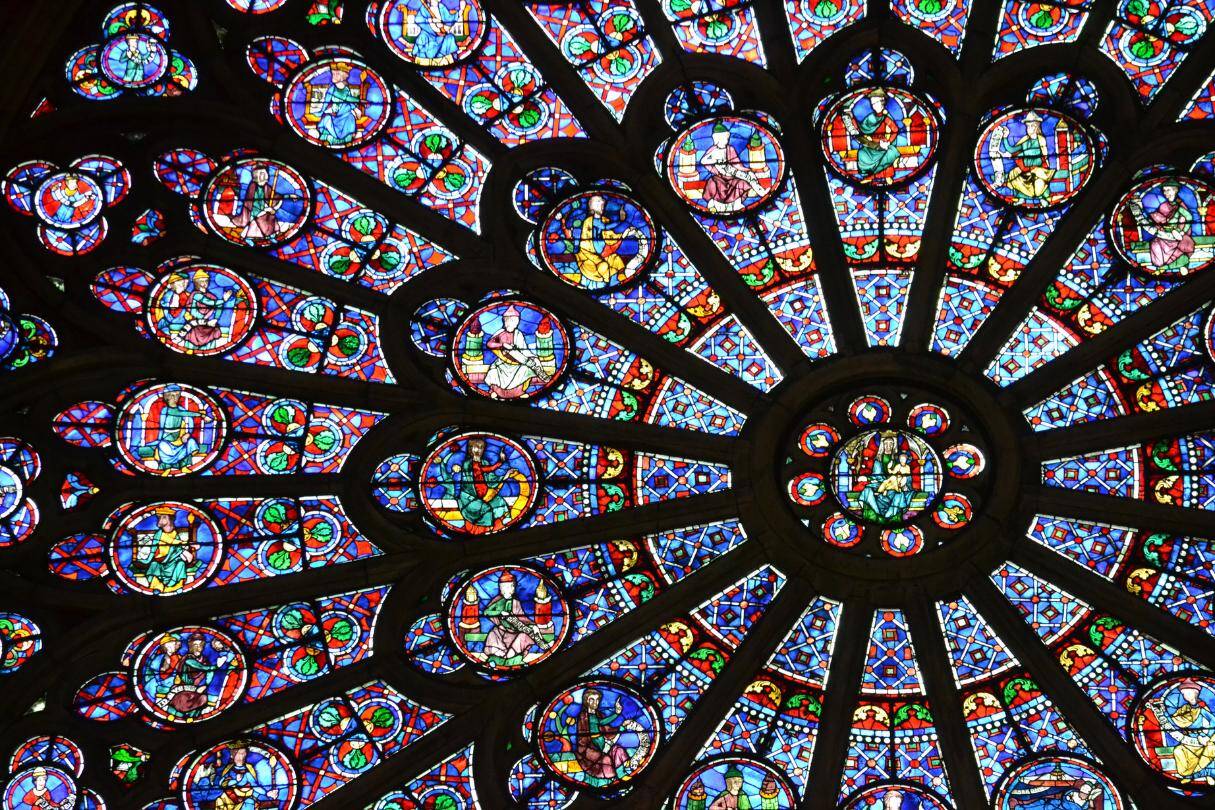
Over the centuries that followed, an iconic religious monument took shape, consisting of a choir and apse, a transept, a nave, chapels, rose windows, flying buttresses, a central spire, gargoyles and Gothic towers, each with multiple stories. Each element was crafted in the prevailing architectural styles of their respective eras, making Notre-Dame a design melting pot of French style. The cathedral's towering height reaches 35 metres (approximately 114 feet). If you include the towers, Notre-Dame soars to 68 metres (223 feet).
The first time Notre-Dame was saved
In 1804, Notre-Dame found itself in the spotlight as Napoleon Bonaparte was crowned Emperor of the French within its grounds. The preparations for this historical event prompted some much-needed surface-level repairs to the cathedral. Napoleon's choice of Notre-Dame for his coronation was strategic. First, having Pope Pius VII in attendance was an attempt to secure the support and approval of the Catholic Church. It also provided the grandiose stage he needed to establish his legitimacy as the ruler of the French people.
Ironically, despite Napoleon attracting attention to Notre-Dame and its importance, his reign inadvertently led to Notre-Dame's decline. Instead of spending money on restoration efforts, most of the state’s financial resources and personnel were siphoned into the military and its wars during Napoleon’s reign. And just as fashion evolves and changes, architecture goes through similar trends and phases. Preference shifted towards neoclassical and romantic styles versus the Gothic look. This led to a general disinterest in investing time and money into preservation efforts for a look that had declined in popularity.
The most unlikely saviour of the cathedral very well may have been an author. The story goes that after decades of war, Notre-Dame had fallen into complete disrepair, pushing local decision-makers to consider tearing down the cathedral entirely. Enter Victor Hugo, yes, the Victor Hugo who wrote "The Hunchback of Notre-Dame." Legend has it that he was compelled to publish the book in 1831 to draw attention to the cathedral.
The book tells the tale of a bell-ringer who lived in the dilapidated Notre-Dame Cathedral, both the man and the building suffering deformities, neglect, and seclusion from society. The novel, with its powerful message, successfully jump-started restoration efforts. Ultimately, in 1844, King Louis Philippe launched plans to restore Notre-Dame to its former splendour.
The tragic events of 2019
On 15th April 2019, the world stood still as heart-wrenching footage of a raging fire at Notre-Dame Cathedral was plastered on screens from Paris to Bangkok and beyond. The fire blazed for around 15 hours before it was put out by firefighters tirelessly working to save this historical masterpiece. While their efforts managed to preserve the overall structure of the building, a large section of the roof and the iconic spire succumbed to the fire. Numerous glass windows, artwork, and religious relics were destroyed by the fire, smoke, and water used to combat the powerful blaze. This tragedy was attributed to an electrical short-circuit in the cathedral’s attic.
The world watched on as President Emmanuel Macron, with a heavy heart, promised the French people that he would lead fundraising efforts and do everything within his power to bring the cathedral back to its former glory within 5 years. Many skeptics doubted the feasibility of hitting this goal, especially considering the precision and expertise required for the job. However, it does seem that restoration efforts are on track to be completed within this timeframe.
The second time Notre-Dame was saved

We are currently living in the era when Notre-Dame was saved for the second time. Many people and elements played a role in saving Notre-Dame from complete collapse, some with roots dating back to the 12th century. Yes, seriously!
The beautiful and structurally sound flying buttresses
The flying buttresses played a crucial role in protecting Notre-Dame on that fateful April day. Here's how: The use of flying buttresses began in the 12th century as a stylish way to support the new, more grandiose structures of the early Gothic period. As windows and vertical cathedral spaces grew larger, the thickness of walls decreased. Innovative minds of the time designed these buttresses to better distribute the weight of the building. There are 30 buttresses that manage the weight of Notre-Dame both vertically and horizontally.
Not only are these features highly functional, but they are also adorned with intricate artistic details, including religious iconography. Just like with any building that has survived for centuries, multiple restorations have helped fortify the buttresses, strengthening the overall structure of Notre-Dame. Part of the credit for keeping the structure upright during the 2019 fire goes to these restorations and the engineering of the buttresses, as much of the building burned, but the buttresses remained intact.
The 400+ brave and prepared firefighters
Within minutes of the first spark, prepared firefighters arrived and sprang into action. The drills they had conducted over the years helped prepare them to handle the complex situation. They acted swiftly by installing protective coverings throughout the interior, using water cannons to slow the fire, and even dropping water from helicopters. They worked nonstop until the blaze was entirely contained.
The strong men and women of Paris
Did you know that a human chain of firefighters, church officials, and volunteers helped remove priceless artifacts from the burning building to safety? Thanks to swift rescue efforts, we still have countless pieces of art and irreplaceable items that may have otherwise been lost forever.
The 1000 masterful artisans
After two years of meticulously stabilizing the building's structure, artisans could begin to work safely, and restoration efforts began. Around 1000 artisans and craftspeople from across France worked on-site at Notre-Dame and in workshops around France in an effort to bring the cathedral back to life in time for the 2024 Notre-Dame opening date. As of today, much of the interior has been restored, including the grand organ and many pieces of art. Buttresses, vaults, and the spire are under repair, and scaffolding continues to be removed in stages in preparation for the big reveal.
To grasp the immensity of this undertaking, let's consider what went into restoring just the grand organ. The entirety of the organ, including its 8,000 pipes, 5 keyboards, and 115 stops, was taken apart and transported to experts for cleaning and restoration. Once ready, each of these pieces was sent back to the cathedral one by one and stored in waterproof containers. Then, once all of the pieces were gathered, the organ could finally be put back together. Was it ready to have its ivories tickled? Not quite! The organ first needed to be tuned with doors closed, a process that takes around 6 months. And we are talking about a piece that suffered very little damage in the fire. Now imagine the effort and finesse required to restore elements that were nearly completely destroyed.
The offical 2024 Notre-Dame opening date
Five long years have passed since the world watched in despair as the flames billowed out from the Notre-Dame cathedral. Against global apprehension, British officials confirm that they are still right on track for the projected Notre-Dame opening day of 8th December 2024. For those who visit Paris before that date, a virtual reality exhibit that covers the details of this immense restoration project awaits. And if you are one of these visitors and feel like you are missing out, remember that we are living through a momentous moment in history. Soak it up!
What to expect from the Notre-Dame reopening
The hundreds of donors from 150 countries around the world helped make these resorations possible; but this influx of support also led to an influx of diverse opinions on how to handle the rebuild. While some donors saw this as a prime opportunity to infuse more modernity into the design of the restorations (some even suggesting that a swimming pool be added to the structure), French tradition won out. Sure, there will be new elements, but the powers that be have chosen to restore the cathedral back to its former grandeur with as much of the original look and feel as possible. Craftsmen and women are even using old-fashioned techniques in an attempt to replicate as many of the Gothic nuances as possible.
Travelling to Paris for the Notre-Dame opening date

Planning on attending this historical reopening? Why not travel to this classic masterpiece in the most classic mode of transportation: by train. Hop aboard a train in London, Amsterdam, Barcelona, or anywhere around Western Europe, and make 'getting to Notre-Dame' part of the adventure.
- London to Paris by train
- Amsterdam to Paris by train
- Brussels to Paris by train
- Barcelona to Paris by train
- Marseille to Paris by train
- Berlin to Paris by train
Fun facts about Notre-Dame
Notre-Dame is one of the main characters in Paris' fascinating history. Here are some fun facts to think about as you stroll the halls of the newly-renewed, freshly-opened Notre-Dame of Paris:
- The distance from Marseille to Paris is 771 km. But where in Paris is this measured from? If you said Notre-Dame, you are correct! All of the road distances from Paris use this Gothic monument as the starting point.
- Notre-Dame isn't just a cathedral; she is a starlet too! You can see her as a background character in a number of movies, including "An American in Paris," "Amélie," "Before Sunset," "A Midnight in Paris," and, of course, "Ratatouille."
- Although Notre-Dame’s two cathedral towers may seem identical, they are a bit different in size.
- Like with other cathedrals in France, some of the bells and organ pipes were melted down to create cannons and bullets to be used in battle.
- The largest bell in Notre-Dame weighs a whopping 13 tons!
- While gargoyles are iconic architectural elements from Gothic design, Notre-Dame’s gargoyles weren't actually added to the cathedral until the 19th century.
- In 1944, the signing of the Magnificat inside Notre-Dame marked the liberation of Paris from Nazi occupation.
- Up until 1889, Notre-Dame’s bell towers were the tallest buildings until a little-known tower called the Eiffel Tower was built.
Powered by Froala Editor