Trains tickets in Germany


Overview
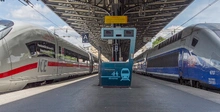
Travelling by train in Germany is one of the most efficient, scenic and sustainable ways to explore the country. From high-speed ICE services that connect major cities to regional routes serving picturesque towns, trains in Germany are world-class.
Getting to Germany by train
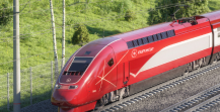
An excellent range of international services makes it easy to reach Germany by train from elsewhere in Europe. Passengers headed to Germany from Britain usually travel with Eurostar from London to Brussels, connecting there onto an ICE or Eurostar (formerly Thalys) train to Germany.
International trains like the Intercity-Express (ICE), TGV, EuroCity (EC) and NightJet connect Germany directly with France, Austria, Switzerland, Belgium, the Netherlands, Italy, Czechia, Denmark, Hungary, Slovakia, Poland and Luxembourg.
Key entry points include Frankfurt (Main) Hbf, a major railway hub for both long-distance and international trains; Berlin Hbf, with excellent northern and eastern connections; and Munich Hbf, ideal for travellers coming from Austria, Italy or Switzerland.
Train operators and services
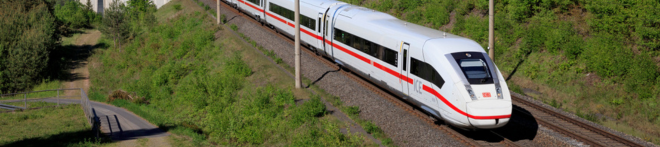
Deutsche Bahn (DB) is Germany’s national rail operator and the backbone of its train network. Offering everything from high-speed ICE services to regional and cross-border routes, DB is known for its efficiency, comfort and excellent connections between major cities and scenic regions alike.
Types of Deutsche Bahn trains:
Intercity-Express (ICE)
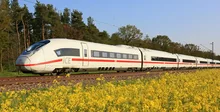
ICE trains are Germany’s flagship high-speed service, connecting major cities like Berlin, Munich, Frankfurt and Hamburg at speeds of up to 300 km/h (186 mph). In addition to these sleek trains’ celebrated speed, ICE services offer free Wi-Fi, roomy air-conditioned coaches, power outlets at every seat and onboard dining options. 1st Class passengers enjoy added perks like at-seat service, quieter cabins and access to DB lounges at major stations. Reservations aren’t necessary, but are recommended during peak travel times.
ICE trains have:
Free Wi-Fi (available in 1st and 2nd Class on most newer model trains)
Power outlets at every seat
Air conditioning
Onboard bistro or snack trolley
Comfortable seating
Quiet zones, family compartments and mobile phone zones
Onboard toilets
Wheelchair-accessible spaces and toilets
Luggage racks and storage areas
Intercity (IC)
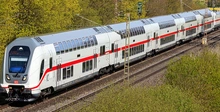
Deutsche Bahn’s Intercity (IC) trains provide comfortable long-distance travel across Germany, connecting popular cities like Hamburg, Cologne, Leipzig, Nuremberg and Dresden with fewer stops than regional trains. IC trains are a great choice if you’re after a comfortable train journey at a slightly lower cost than high-speed ICE trains.
IC trains offer travellers roomy seating, onboard catering, and in 1st Class, even more space and quiet. While not as fast as ICE trains, IC trains still reach speeds of up to 200 km/h.
IC trains have:
Wi-Fi (on many modernised trains)
Air conditioning
Onboard bistro or snack trolley
Comfortable seating
Quiet zones
Onboard toilets (accessible for all passengers)
Wheelchair-accessible spaces and toilets
Luggage racks and storage areas
EuroCity (EC)
International long-distance EuroCity (EC) trains connect Germany with neighbouring countries like Austria, Italy, Switzerland, Czechia and Poland. Though not as fast as ICE trains, EC services are known for their picturesque routes, including the journey from Zurich to Munich via Lake Constance and Berlin to Prague through the Elbe River valley.
EuroCity trains offer comfortable seating, onboard dining cars or snack services, and 1st and 2nd Class options. Some trains have power outlets, and select newer models have Wi-Fi. Seat reservations are usually optional but recommended for international legs.
EuroCity trains have:
Wi-Fi (on newer models)
Air conditioning
Onboard dining car or snack trolley
Comfortable seating
Quiet zones (on select services)
Onboard toilets (accessible for all passengers)
Wheelchair-accessible spaces and toilets
Luggage racks and storage areas
Regional trains
Regional trains in Germany include Regional-Express (RE) and Regionalbahn (RB) services, which offer reliable and budget-friendly ways to explore cities and towns across the country. While RE trains are faster and make fewer stops, RB trains serve smaller stations and local routes, ideal for scenic day trips and getting off the beaten path. These trains don’t require reservations and are included in most rail passes. Expect basic amenities like luggage space and toilets. These services also tend to only offer Standard Class seating.
Major stations
Germany’s main train stations are centrally located in major cities, with easy access to local transport like U-Bahn, S-Bahn, trams and buses. Many stations also feature shops, cafés, and services, adding to their convenience.
Berlin Hbf
Berlin Hauptbahnhof (Hbf) is Germany’s largest railway station, welcoming more than 350,000 travellers through it daily. It’s a major hub for national and international rail travel, offering frequent ICE, regional and international train services. With direct connections to the S-Bahn, U-Bahn, trams and buses, it’s easy to reach all corners of the city. Berlin Brandenburg Airport is also accessible from Berlin Hbf via regional train in about 30–40 mins. Along with ATMs, Wi-Fi and luggage lockers, you’ll find extensive shopping and dining options, including late-night bakeries — perfect for early trains or late arrivals.
Munich Hbf
Munich Hbf is one of Germany’s most important rail hubs with ICE, regional and international trains passing through it daily. You’ll also find shops, restaurants, luggage storage lockers and tourist information points within the station, and direct links to the U-Bahn, S-Bahn, trams and buses right outside the main entrance for easy public transport. Need to catch a flight? Munich International Airport is about 40 mins away via the S8 or S1 S-Bahn lines, which run every 10 mins from the station’s lower level.
Frankfurt (Main) Hbf
Frankfurt (Main) Hbf’s striking 19th-century building is one of Europe’s busiest rail stations, with ICE, regional and international trains making it a key gateway for travel across Germany and beyond. The station is equipped with Wi-Fi, shops, luggage lockers and a good range of quick bites in the food court on the lower level. For local travel, U-Bahn, S-Bahn, trams and buses are all just steps outside the main hall, and Frankfurt Airport is reachable in just 15 mins via the S8 or S9 S-Bahn.
Cologne (Köln) Hbf
Located just steps from Cologne Cathedral, Cologne Hbf serves ICE, regional and international trains, and is an important stop on routes between Amsterdam, Brussels and Frankfurt. The station offers direct connections to S-Bahn, U-Bahn, buses and trams. Airport transfers are also a breeze with Cologne Bonn Airport just 15–20 mins away via the S19, RE6 or RB27 trains.
Hamburg Hbf
Hamburg Hbf is Germany’s busiest rail station, serving over half a million passengers daily. It’s a major hub for ICE, regional and international trains travelling around Germany and into Northern Europe to cities like Aarhus, Copenhagen and Amsterdam. Right outside the station, you’ll find S-Bahn, U-Bahn, bus and taxi connections. And, Hamburg Airport is easily reachable in just 25 mins via the S1 S-Bahn.
Popular train routes
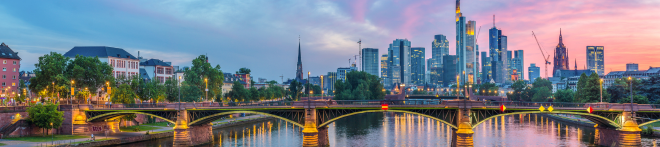
These train routes are among the most popular in Germany, connecting major cities with fast, frequent train services that are ideal for both business and leisure.
Berlin to Munich
With Berlin to Munich train services departing approximately every 30 mins from around 04:30 to 23:30, you can swap currywursts in the capital for beer gardens in Bavaria in as little as 4 hrs by high-speed ICE train.
Frankfurt to Cologne
Frequent services run between Frankfurt and Cologne from around 05:30 to 23:30, with departures approximately every 20-30 mins. Speeding along the scenic Rhine Valley, this route usually takes around 1 hr 15 mins.
Hamburg to Berlin
High-speed trains between Hamburg and Berlin run approximately from 05:30 to 23:00 every 30 mins. Gliding through northern Germany’s countryside, the journey takes as little as 1 hr 45 mins on the fastest ICE trains.
Munich to Stuttgart
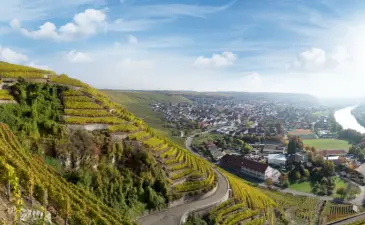
The high-speed train from Munich to Stuttgart runs from around 05:00 to midnight, with regular departures every 30-60 mins. With average journey times of 2 hrs 15 mins, you can look forward to a patchwork of rolling hills, quaint towns and lush vineyards as you travel between Bavaria and Baden-Württemberg.
Frankfurt to Nuremberg
Racing past dense forests, vineyard-dappled hills and charming half-timbered villages, the high-speed train from Frankfurt to Nuremberg offers frequent services throughout the day from around 05:00 to 23:30. The journey generally takes just under 2.5 hrs.
Scenic routes in Germany
From fairytale Bavarian castles to vine-covered hills and postcard-perfect river views, here are some of the best train routes in Germany to make the most of the country’s swoon-worthy scenery.
The Rhine Valley Line
Uncork the beauty of Germany’s wine country on the Rhine Valley Line route. Connecting the historic cities of Mainz and Koblenz, you’ll be treated to eyefuls of storybook landscapes, castles and vineyards along the Rhine River.
The Black Forest Railway
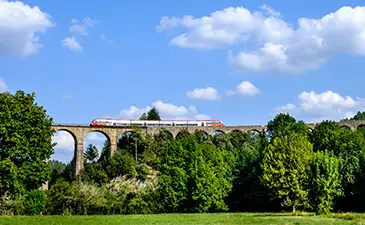
This masterpiece of 19th-century engineering serves up a slice of Germany’s most enchanting scenery. Running between Offenburg and Singen in Germany’s fabled “Schwarzwald,” the Black Forest Railway cuts through scenic woodlands, deep gorges and Hansel and Gretel-esque villages.
Munich to Füssen (Neuschwanstein Castle)
Roll past sparkling lakes, snow-dusted peaks and alpine meadows on this popular Bavarian route between Munich and Füssen, the gateway to the Disney-like Neuschwanstein Castle. The journey typically takes 2–2.5 hrs.
The Harz Railway
Gliding through the heart of central Germany’s Harz Mountains, the Harz Railway (Harzquerbahn) is one of Germany’s most famous narrow-gauge railways. With the line’s Old World steam engines chugging through fairytale forests, half-timbered towns and up Mount Brocken, its idyllic scenery is a year-round treat.
UNESCO World Heritage Sites
Germany’s UNESCO World Heritage Sites are not only rich in history and culture, they’re also incredibly easy to reach by train.
Cologne Cathedral
Take a direct train to Cologne Central Station from Berlin, Frankfurt (Main) Hbf, Munich Hbf, Hamburg, Düsseldorf, Bonn or Aachen. Once you’ve arrived, the towering Gothic masterpiece is right next to the station. Visit early or in the evening to avoid crowds – this is Germany’s most-visited landmark after all.
Würzburg Residence
Built in the 1700s for the Prince-Bishop of Würzburg, the Würzburg Residence is one of Europe’s most opulent Baroque palaces. It’s just a 10-minute walk from Würzburg Hbf and makes for an easy day trip by regional and long-distance trains from cities like Frankfurt, Nuremberg and Munich.
Bamberg Old Town
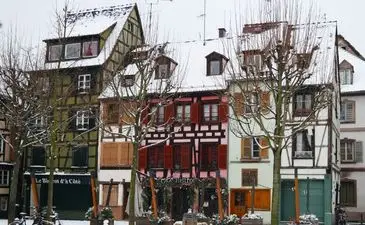
Bamberg's UNESCO-listed Old Town is about a 20-minute walk from Bamberg Hbf. If you're not up for walking from the station, hop on a local bus (lines like 901 or 991) to reach the city’s central bus station. From there, it's about a five-minute walk. After a day of exploring the Old Town’s cobbled medieval streets, stop for a rauchbier (smoked beer) at the historic Schlenkerla brewpub, founded in 1405.
Sanssouci Palace (Potsdam)
Once serving as Frederick the Great’s summer retreat, the opulent Sanssouci Palace is often cited as Potsdam’s answer to Versailles. Good news for those ready to feel royal for a day – the palace is an easy day trip from Berlin. Catch the 30-minute S7 S-Bahn from Berlin Hbf to Potsdam Hbf. Once there, hop on the 695 or X15 bus to the "Schloss Sanssouci" stop.
Upper Middle Rhine Valley
Once the heart of the medieval Holy Roman Empire and the inspiration for countless fairytales, fables, operas and paintings, the Upper Middle Rhine Valley is one of Europe’s most celebrated romantic landscapes. To take in the storied scenery by train, hop on the Regionalbahn (RB) from Koblenz to Bingen (1–1.5 hrs). It’s best to sit on the left side heading south for river and castle views. Alternatively, take the faster Regional-Express (RE) train, which takes around 45–50 mins.
Speyer Cathedral
Speyer Cathedral is one of Europe’s most magnificent Romanesque churches and is just a 10-minute walk from Speyer Hauptbahnhof. Alternatively, hop on a quick 5-minute bus (lines 564 or 565) to Domplatz. It’s best to visit early in the day to beat the crowds.
Aachen Cathedral
Not only is Aachen Cathedral one of Europe’s oldest cathedrals, but it’s also the first German cultural monument to be added to the UNESCO World Heritage list. It’s an easy journey by a direct regional train (RE) from Düsseldorf (around 1.5 hrs) or from Cologne (1.5 hrs). Once at Aachen station, the cathedral is just a 15-minute walk away.
Weimar (Classical Weimar)
Home to Classical Weimar – a UNESCO World Heritage Site consisting of twelve sites in and around the city – Weimar is an easy day trip by train from major German cities like Erfurt (11 mins), Berlin, Leipzig and Frankfurt. From Weimar Hbf, you can either walk 20–30 mins to the city centre or take a 10-minute bus (Line 1). The Goethe Residence, Belvedere Castle and the Wittumspalais are among Classical Weimar’s greatest treasures.
Rail passes and tickets
Eurail (for non-EU residents) and Interrail (for EU/UK residents) Germany Passes offer flexible, affordable rail travel across the country. With the Germany One Country Pass, you can easily travel on most Deutsche Bahn trains, including high-speed ICE trains, regional services and many private railways. You can choose between 3 to 8 travel days within a one-month period, making it ideal for planning multiple stops without a strict itinerary.
If you’re considering exploring beyond Germany, the Eurail/Interrail Global Pass covers rail networks in 33 European countries, allowing for easy border-crossing train journeys. This includes popular routes like Berlin to Prague, Munich to Vienna, and Cologne to Amsterdam. The Global Pass also offers continuous or flexible options, so you can choose consecutive travel days or spread them out over several weeks. Additional rail pass perks include hostel offers and discounts on ferries, city cards, and public transport in select cities.
Reservations aren’t required on most regional trains in Germany, but they are recommended or required on many long-distance and international routes, especially ICE, IC or night trains. With a pass, you can often board regional trains at will, but for high-speed and cross-border journeys, it’s smart to book a seat in advance.
Booking trains in Germany is simple with Rail Europe. Once you’re on our website, choose your departure and arrival points, enter the appropriate passenger details and voilà, you’re all set for your German train adventure.
Exploring Germany by train
Germany’s cities are as diverse as they are fascinating, offering more history, culture and entertainment than you can shake a pretzel at. Whether you’re after museums, landmarks, festivals or food scenes, there’s something to suit every taste.
Berlin
From the iconic Brandenburg Gate to Museum Island and Checkpoint Charlie, Berlin blends grit, glamour, history and culture like few other cities. Make sure to explore beyond the capital’s centre – Kreuzberg, Neukölln and Friedrichshain are some of the city’s trendiest neighbourhoods, known for their cafés, street art and indie shops. Feel like a day trip? Potsdam and Wittenberg are both under an hour away by train, and Leipzig – once home to Bach, Mendelssohn and Wagner – offers a symphony of sights less than 1.5 hrs from the capital.
Munich
Bavarian charm meets cosmopolitan cool in Munich. Visit Marienplatz and the Rathaus-Glockenspiel, and relax in the huge English Garden, one of Europe’s largest city parks. The Kunstareal museum district and the Nymphenburg Palace are heavy hitters too, and as a gateway to the Bavarian Alps, Munich is a great base for hiking and skiing. Of course, no visit to the city is complete without wetting your whistle at the 16th-century Hofbräuhaus beer hall. Or, for even more steinfuls of fun, time your visit with Munich’s Oktoberfest celebrations.
Hamburg
Known for its huge port, UNESCO-listed warehouse district (Speicherstadt) and modern architecture, Hamburg is a maritime city with plenty of creative edge. Don’t miss grabbing a Fischbrötchen (fish sandwich) from the Sunday morning Fish Market. Too early for you? Trade cod for clubs in Reeperbahn, the city’s famous entertainment and nightlife district. Hamburg is also under an hour away by RE train from Lübeck, a city famous for its marzipan, UNESCO-listed Old Town and Gothic spires.
Frankfurt
With its medieval squares and sleek skyscrapers, Frankfurt is the perfect blend of old and new. Soak up some culture at Goethe House and Museum Embankment (Museumsufer), and head up to the Main Tower’s observation deck for panoramic views over the city. When you need to refuel, chow down on local eats at the Kleinmarkthalle food hall. For an easy day trip, consider hopping on an ICE train to Heidelberg (around 1 hr 10 mins), known for its Old Town and castle ruins overlooking the Neckar River.
Cologne
Best known for its towering Gothic cathedral, Cologne isn’t lacking in cultural and historic gems. Explore the Old Town’s historic alleys and enjoy breezy strolls along the Rhine riverside. Thirsty? Cosy up in a brewpub for a crisp Kölsch beer. One of the best times to visit Cologne is during the Cologne Carnival, typically held in the week leading up to Ash Wednesday. Look forward to street parades, decorated floats, concerts and plenty of citywide parties.
Beyond Germany
Germany’s central position makes it an excellent springboard for exploring other European cities by train. With high-speed connections to cities like Paris, Amsterdam, Vienna and Zurich, it’s easy to turn your German adventure into a grand European tour.
Paris
Travel from Frankfurt, Stuttgart or Mannheim to Paris in 3.5 to 5.5 hrs on high-speed TGV or ICE trains, taking in the beauty of the Rhine Valley and French vineyards en route to the capital.
Vienna
Sleek Railjet and ICE trains connect cities like Nuremberg and Munich with Vienna in under 5 hrs, and Frankfurt in under 6.5 hrs, passing through rolling Alpine foothills and chocolate box Austrian towns.
Zurich
Direct ICE and EuroCity trains connect Germany to Zurich multiple times a day, with popular routes from Frankfurt (around 4 hrs), Stuttgart and Munich. Stunning views of mountains, lakes and sweeping Swiss landscapes come included.
Amsterdam
High-speed ICE trains from Frankfurt, Cologne and Düsseldorf reach Amsterdam Centraal station in 4–5 hrs, with views of the Rhine, lowland farms and grazing cattle along the way.
Brussels
Leave from Cologne, Düsseldorf or Frankfurt and arrive in Brussels just 2–3.5 hrs later via ICE or Eurostar (Thalys). Look out the window to enjoy views of the Rhine-Ruhr region, rolling green fields and picturesque Flemish villages.
Milan
Take the scenic journey from Munich to Milan through the Austrian Alps in 7–8 hrs on the direct EuroCity train. Ready yourself for breathtaking mountain vistas and charming historic towns en route.
Travel tips
Book early: Secure the best price on fares by booking international train tickets in advance through Rail Europe.
Consider a rail pass: If you’re planning on visiting multiple countries, a Eurail or Interrail Pass offers flexibility and savings.
Check seat reservations: Some high-speed trains like TGV and EuroCity require seat reservations, so be sure to add these when booking.
Allow transfer time: Always factor in 15–30 minutes for transfers, especially when crossing borders. Rail Europe’s booking system often shows suggested transfer times.
Be ready for border checks: If you’re travelling between countries, keep your passport and tickets handy for potential border control checks during your transfer.
Watch for deals: Rail Europe frequently offers discounts and special promotions, so keep an eye out for the best savings.
Go digital: Use Rail Europe’s digital tickets for a hassle-free, paperless journey.
Practical information
Ready to book your German train tickets? Here are some top tips and practical information to get you started.
Ticket types and how to buy
Rail Europe offers a variety of German train tickets to suit different travel styles, budgets, and itineraries.
Flexpreis (Flexible Fare): These tickets are fully flexible. They allow you to travel on any train that day, and are usually refundable and changeable up to the day of travel.
Sparpreis (Saver Fare): These tickets are cheaper, but less flexible. They’re valid only for a specific train and are only partially refundable (with a fee).
Super Sparpreis (Super Saver): This is the cheapest option, but know that these tickets are non-refundable and non-changeable. They’re also only valid for a specific train.
Station navigation
In general, train stations in Germany are well-signposted in both German and English, with digital departure boards showing real-time platform information. Look out for “Gleis” (track) numbers to find your train. Give yourself extra time to navigate large stations — they’re often spread over multiple floors.
Luggage policies
There’s no official weight limit, and you can bring as much luggage as you can reasonably carry. Suitcases and bags can be stored in overhead racks, at the end of each carriage, or in the space between seats.
Accessibility
Most large stations like Berlin Hbf, Frankfurt Hbf and Munich Hbf have accessible facilities, including elevators, ramps and accessible toilets. Newer regional and ICE trains often come equipped with low-floor access or lifts for wheelchair users. If you need additional help, Deutsche Bahn offers a free Mobility Service (Mobilitätsservice-Zentrale) to help with boarding, transfers and assistance at stations — just request the service in advance.
Safety tips and general advice
Pickpocketing: Be mindful of your surroundings and keep an eye on your belongings. This is especially important when going through major stations like Berlin Hbf or Frankfurt Hbf, and when travelling on public transport during rush hour.
Emergency numbers: In the unfortunate event that you find yourself in need of emergency help, dial 112 for ambulance and fire services, or 110 for the Polizei (police). Don’t hesitate to ask DB staff for help either — they usually speak English and are happy to assist.
Validate your tickets: Make sure to validate your regional or paper ticket in the stamp machine before boarding your train to avoid a hefty fine. German train stations don’t typically have barriers, but random onboard ticket checks are common.
Frequently asked questions
Why choose train travel in Germany?
Train travel in Germany is fast, comfortable and planet-friendly. High-speed ICE trains connect major cities like Berlin, Frankfurt and Munich in just a few hours, while slower regional routes allow you to take in the beauty of the country’s landscape. With flexible ticket options, onboard amenities and no need for airport lines, travelling by train is one of the best ways to explore Germany.
How do I book German train tickets?
You can buy all German train tickets on the Rail Europe website. With Rail Europe, you can organise your trip ahead of time and compare tickets from all carriers, including DB trains.
Do I need seat reservations for trains in Germany?
While you don’t strictly need a seat reservation on ICE, IC and EC (long-distance trains), it’s worth doing so on weekends, holidays and in rush hours as these trains can get crowded during these busy times. Seat reservations aren’t available at all on Regional trains, including RE, RB and S-Bahn services.
Can I use a Eurail Pass in Germany?
Yes, absolutely. Eurail and Interrail Passes are valid on DB trains. Benefits include unlimited travel on the network, flexibility, international connections to and from cities like Paris, Amsterdam, Vienna, and Zurich, and access to discounts on other travel services. Certain trains do require a seat reservation.
What should I do if I miss my train?
If you have a flexible ticket (Flexpreis), you can simply get on the next available train at no additional charge. If you have a Saver or Super Saver Ticket (Sparpreis or Super Sparpreis) tied to a specific train, the ticket isn’t usually valid anymore, so you’ll need to purchase a new ticket or pay a fee to change your reservation. Station attendants and DB staff can also answer any questions you have.
How do I find schedules for trains in Germany?
Finding the train schedule in Germany is easy. Check Rail Europe for information and updates.
What’s the best way to save money on German train tickets?
The best way to save on costs is to book early. Deutsche Bahn offers "Super Sparpreis" and "Sparpreis" fares, which are significantly cheaper than regular fares but must be booked in advance. These types of tickets are limited and prices rise the closer you get to the travel date.