


The train traveller’s “Tour de France”: medieval architecture edition
Just as this year’s Tour de France wraps up, so does our “Tour de France” by train!
Over the past few weeks, we've explored train travel across France, experiencing staples of French culture like art, gastronomy, and outdoor adventures! We're now rolling into our final round, which we'll call “Tour de architecture” — specifically medievel architecture. The best part of our “Tour de France”? When you go by train, everyone's a winner!
Medieval France: the 4 day “Tour de France”
During the French medieval era, the globally recognized and lauded Romanesque and Gothic styles emerged. Medieval society was primarily dictated by the church, which explains why much of the great architecture from this period consists of cathedrals and other religious landmarks. Beyond the structures themselves, medieval architecture features stunning statues, stained glass windows, carvings and new techniques, including flying buttresses and pointed arches. Take this “Tour de France” by train and see some of the world’s most stunning and famous buildings in real life, instead of just from the pages of guidebooks.
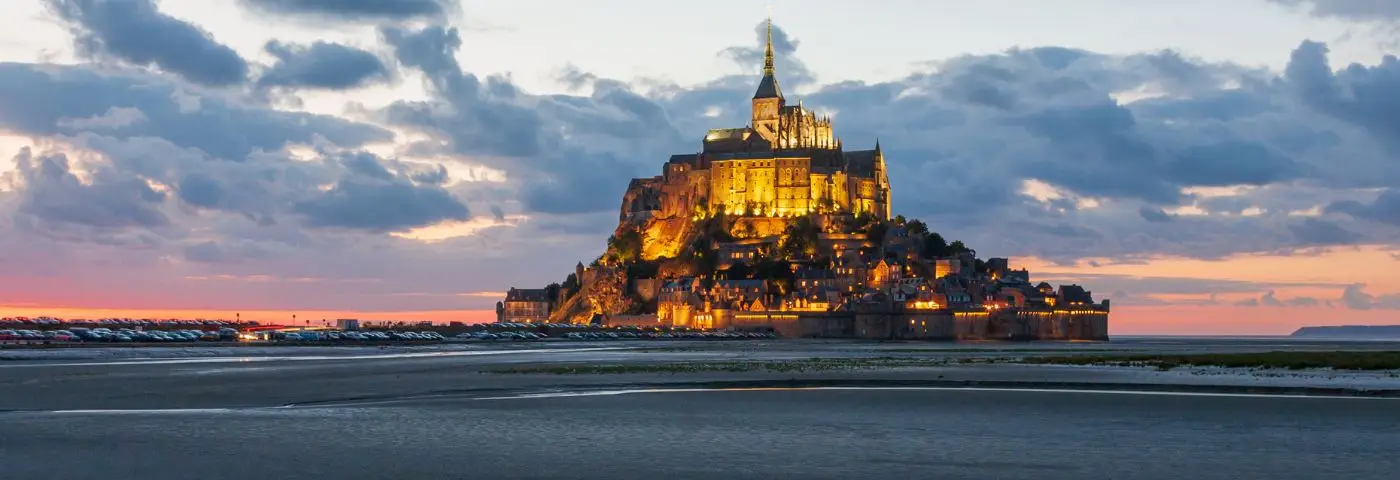
Starting point: Mont St Michel, France

UNESCO listed, Mont St Michel was founded as a religious sanctuary in 708, which continued to be built over 1300 years. If you are an architecture AND a pop culture fan, you're in luck! This sanctuary inspired many works of fiction, including Minas Tirith in Tolkien’s "The Lord of the Rings" and or the castle in Disney’s "Tangled." Although only 30 people inhabit Mont St Michel today, the medieval city welcomes 2.5 million visitors annually. Be one of them this year! Just be sure to pack good shoes because if you choose to walk up to the sanctuary, the path does get a bit steep, but the view makes it totally worth it!
Next stop: Moret-sur-Loing, France
Train travel time: around 5h
Located on the edge of the Fontainebleau forest, Moret-sur-Loing is well known for its barley sugar, its Sucre d’Orge and landscape drawings by impressionist Alfred Sisley. When in town, take the time to also check out the half-timbered houses, the stone bridge that passes over the Loing River, Porte de Bourgogne and Porte de Samois (the city gates that date back to the medieval ages) and, of course, the gothic Notre-Dame church.
Next stop: Lyon, France
Train travel time: around 2h19
Explore the quaint cobblestoned streets and narrow passageways, or Traboules, of Vieux-Lyon, which date back 1000+ years. The town of Lyon itself dates all the way back to 43 BC, which means there are exceptional landmarks around every corner. Add some of the following spots to your list when visiting the gastronomy capital of France: Cathédrale Saint-Jean-Baptiste, Maison du Chamarier and Musée Gadagne.
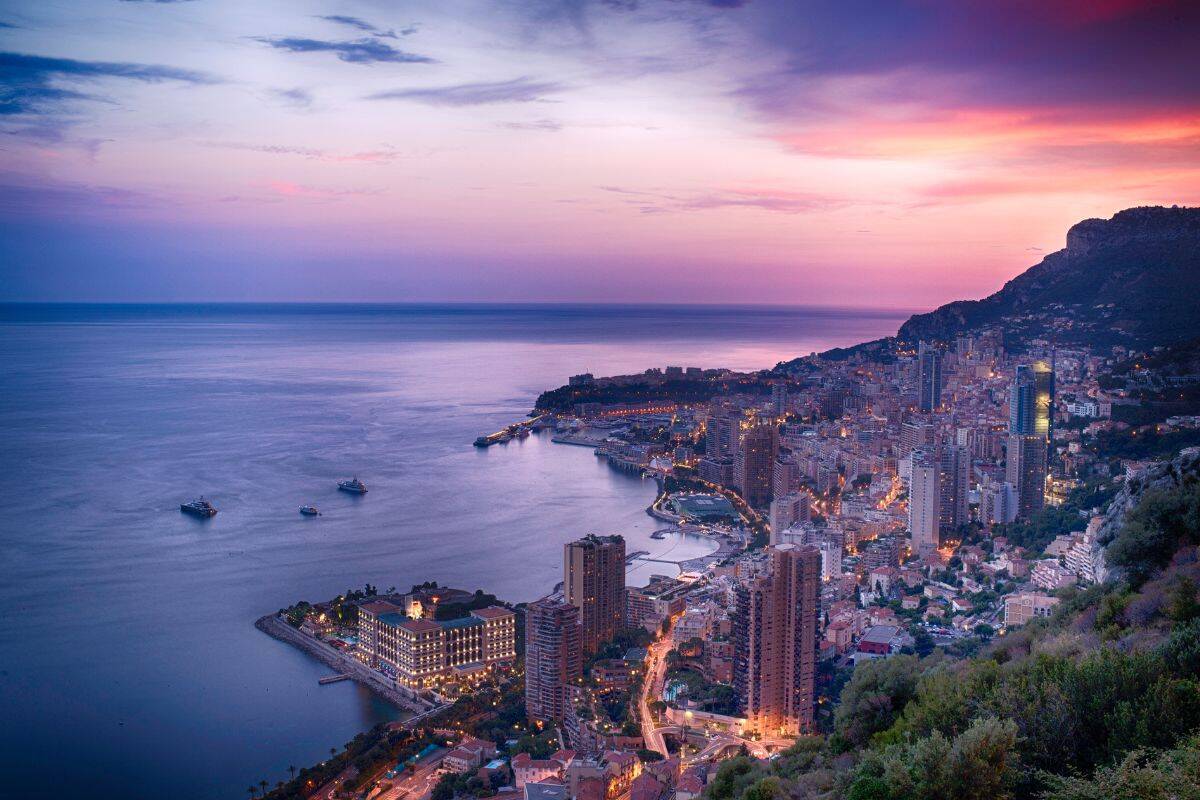
Final stop: Monaco, France
Train travel time: around 5h35
Thanks to its prime location along the Mediterranean Sea, the Genoese built a fortress in Monaco in the 13th century, officially putting it on the map. Since then, Monaco has served as a major site for defense and trading. Explore Monaco’s medieval quarter known as The Rock, where you’ll find the Prince’s Palace and feel like you stepped back in time as you pass through the winding pathways. Beyond the beach, be sure to also visit Fort Antoine, St. Nicholas Cathedral and the Oceanographic Museum when in town.
Medieval France: the 7 day “Tour de France”
If you have the extra time, opt for the 7-day “Tour de France” because there is so much to see and experience on the Tour de Architecture.
Starting point: Colmar
Colmar boast some of the best preserved structures from the medieval era in all of France. Thoroughly picturesque, the cobblestoned Old Town features beautiful half-timbered medieval and early Renaissance buildings. For one, the Église Saint-Martin completed in 1365, is an iconic symbol of Colmar. Visitors can also see other medieval gems including the Koïfhus, or Old Customs House and the Maison Pfister, with its impressive wooden gallery. For fans of medieval art, the Unterlinden Museum is a can’t-miss.
Next stop: Versailles
Train travel time: 2h30
UNESCO listed, the magnificent Palace of Versailles is one of the greatest achievements in French 17th century art, but its history and significance dates all the way back to medieval times. In fact, the first structure to be built on this land was the Château de Versailles. It served as a hunting lodge for lords and visiting royalty, but, with its modest size and prime location, it did not survive for long. The breathtaking palace that you can now see when visiting Versailles took over this modest lodge.
Next stop: Limoges
Train travel time: 3h57
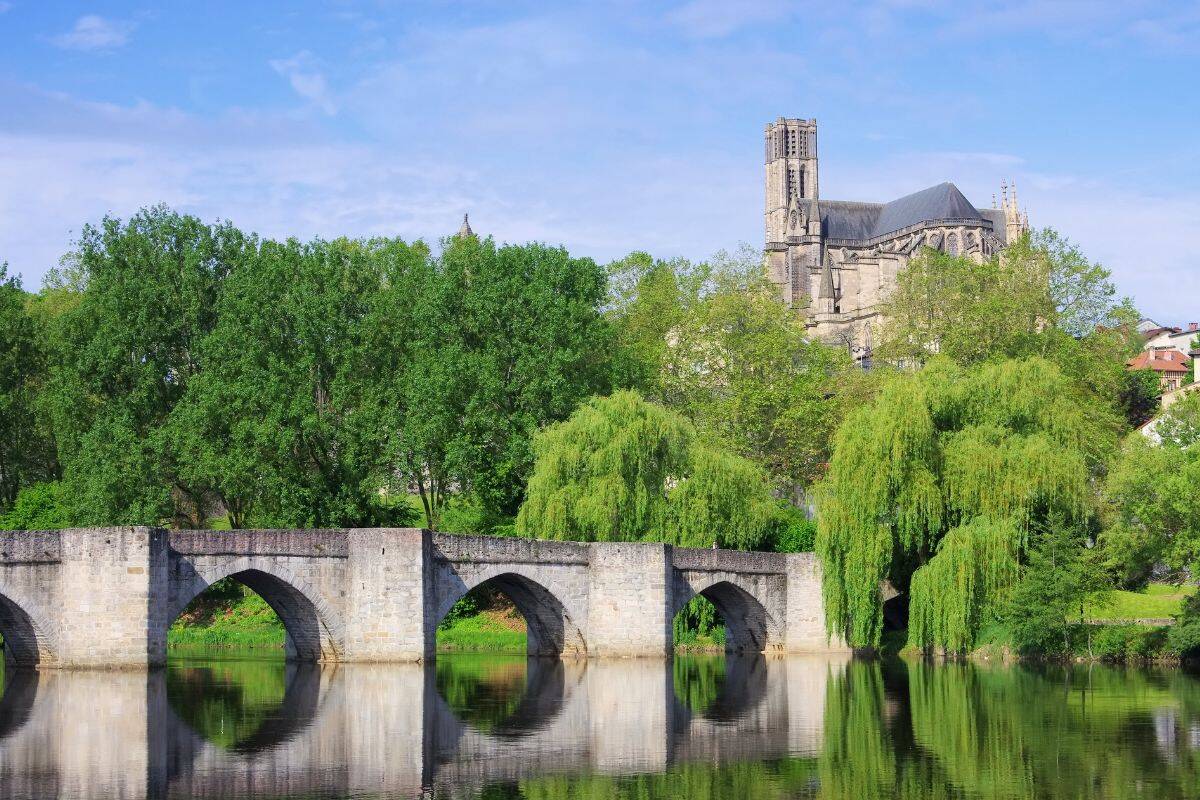
Packed with history and medieval timberframe houses, Limoges is known for its decorated porcelain. Although it dates all the way back to 10 BC, during the medieval ages Limoges became a centre of trade and culture. Architecture highlights include the Cathédrale Saint-Étienne, Saint-Michel-des-Lions Church and the timber-framed houses. These charming houses are famous for their colourful facades and wooden beams. The best spot in town to see these structures is the Quartier de la Boucherie, or the Butchers' Quarter.
Next stop: Rocamadour
Train travel time: 2h
One of the country’s top pilgrimage destinations, the dramatic setting of the village, stoned walls and medieval houses will take you back in time. The most exceptional architecture to be seen in town is the Sanctuary of Rocamadour, which is built right into the slide of the cliff. The sanctuary is made up of seven different chapels, including the famous Chapelle Notre-Dame, where you can find the world-renowned statue “Black Madonna.” Take in the well-preserved medieval frescoes and carvings that line the walls of the chapels.
Next stop: Toulouse
Train travel time: 4h
Dubbed "La Ville Rose" due to the terracotta bricks used in many of its buildings, Toulouse's Old Town is home to charming historical religious buildings. Architectural highlights include the Basilique Saint-Sernin, Église des Jacobins, Cathédrale Saint-Étienne and Pont Neuf, or the new bridge. Toulouse serves as a cultural hub in France today as it did during the medieval times. To stand on the same ground as great minds of the medieval time, visit the University of Toulouse, one of the oldest universities in all of Europe, established all the way back in 1229.
Next stop: Avignon
Train travel time: (3h43)
Situated on the banks of the Rhône River, the historic centre of the ‘City of the Popes’ is an outstanding example of medieval architecture. Completed in 1364, it is the largest medieval Gothic building in all of Europe. Having served at the seat of the papacy during the 14th century, Avignon played an important role during the medieval period, which is evident when walking the charming streets today. When visiting Avignon, be sure to also stop by Avignon Cathedral (Cathédrale Notre-Dame des Doms) and see the medieval city walls of Avignon. Trips to nearby Arles and Nimes, both teeming with well-preserved Roman history and architecture, are a can’t miss for history buffs.
Final stop: Eze
Train travel time: 4h30
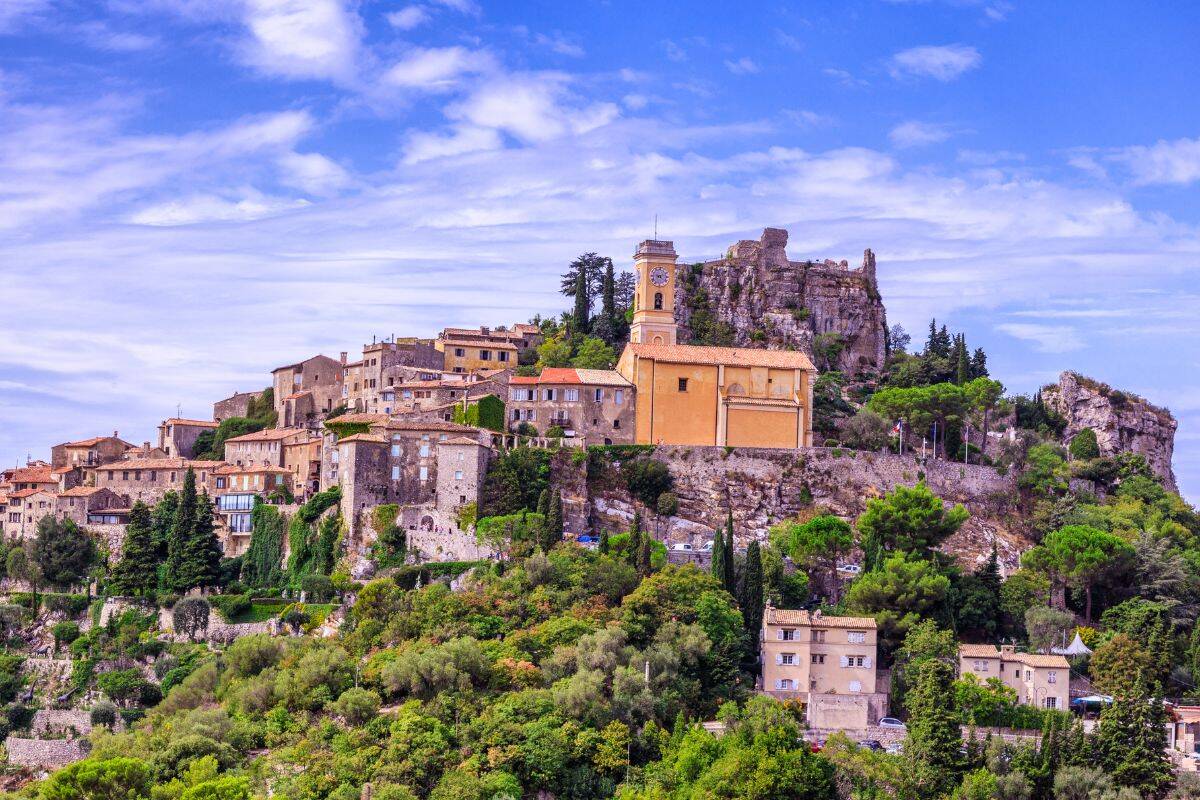
An enchanting mountain top village between Nice and Monaco, enjoy the unbeatable panoramic views and detailed ancient facades. An easy stop during travel along the French Rivieira, Eze serves up fairytale charm along its cobbled streets sprinkled with colourful shops and unbeatable panoramic views. When in town, make a stop at Èze Castle Ruins, Chapelle de la Sainte Croix and the Jardin Exotique, which boasts the best views in all the city.
Trains: the most essential part of this "Tour de France"
Our Tour de France was built around train travel because going by rail makes ‘getting there’ part of the experience. Aboard a train, you are able to take in breathtaking architecture and lush countrysides and can travel alongside locals that often have a fascinating story or a super-useful travel tip to share. Start booking your adventures across France — no bicycle required!
Powered by Froala Editor