
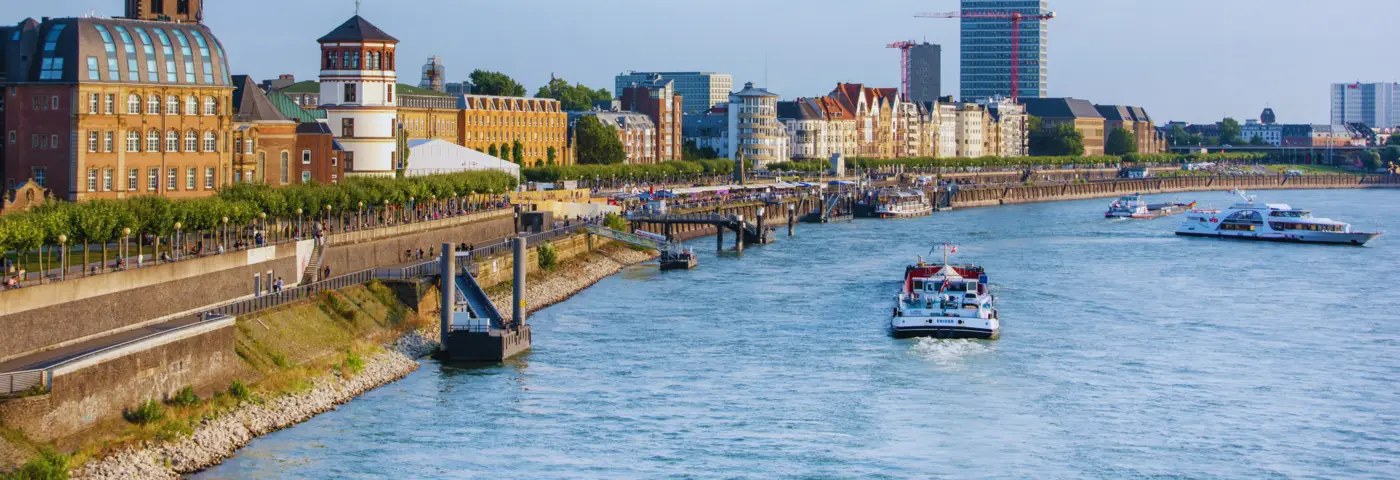


Düsseldorf connections: the best day trips by train
One base, countless day trips. Explore more of Germany from charming Düsseldorf.
Known for its role in business and fashion, Düsseldorf is often overlooked as a leisure destination. But beyond the shiny surface lies a city full of character: from contemporary art spaces and historic squares to riverside walks and a vibrant culinary scene. Düsseldorf doesn’t need to boast — it offers cultural depth with quiet confidence. And with its central location and excellent rail connections, it’s also one of the most convenient starting points for sustainable train travel across North Rhine-Westphalia and beyond..
Düsseldorf’s central location and excellent rail connections make it one of the best-connected cities in the west of Germany. Within 90 mins or less, you can discover a treasure trove of UNESCO World Heritage sites, relax in a Roman spa, go Dutch on lunch in the Netherlands and walk in the footsteps of historic greats like Beethoven and Charlemagne, all without switching hotels. Whether you’re chasing history, nature, or just a great slice of cake in a brand new city, there’s a train trip from Düsseldorf to take you there.
After a day of exploring, you can rest easy knowing you’re returning to your Düsseldorf base in time for a stroll along the Rhine promenade, a gallery visit or dinner in the buzzy Altstadt. It’s a destination worth staying in, and one that opens the door to countless more adventures.
Cologne
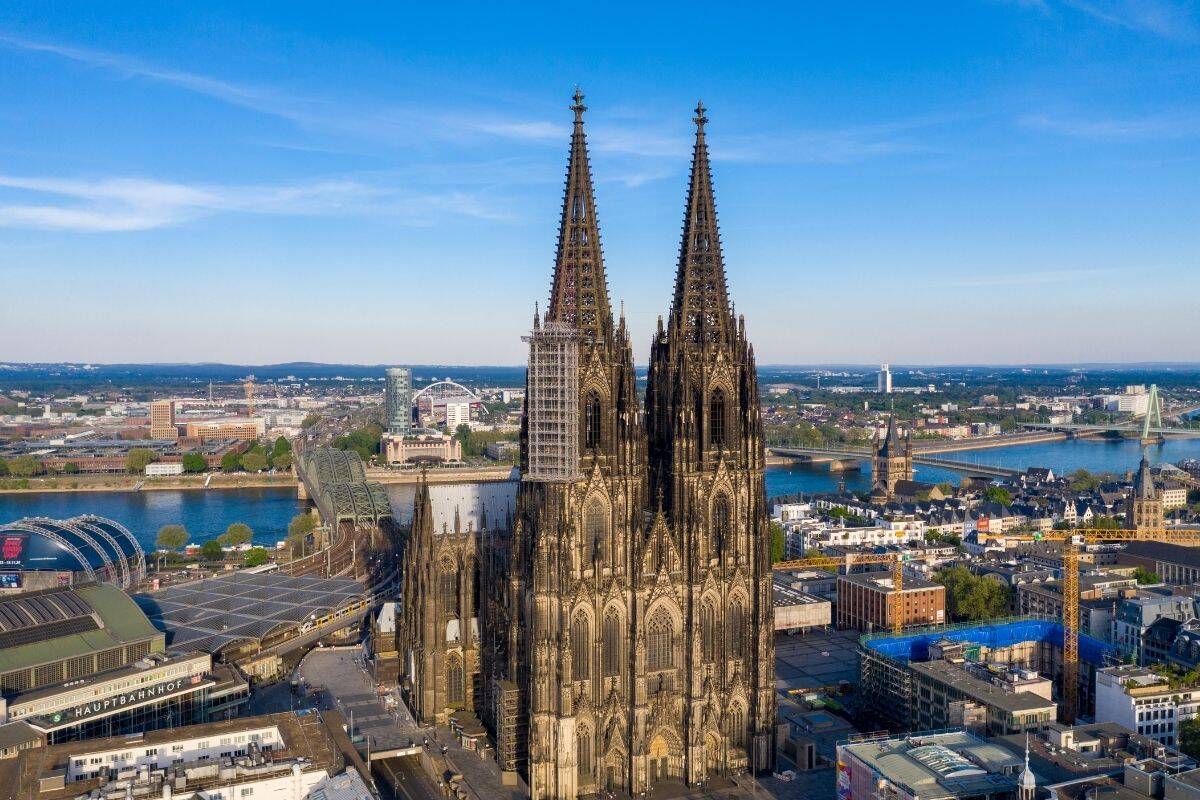
With over 2,000 years of history, Cologne offers one of the best day trips from Düsseldorf for culture seekers. Once you’ve arrived at Cologne Hauptbahnhof (Köln Hbf), there’s no need to look far for your first taste of the city’s beauty. Right outside the station, you’ll find the UNESCO-listed Cologne Cathedral, a masterpiece of Gothic architecture and home to treasures like the relics of the Magi and St. Peter’s Staff. There’s plenty more to see in Cologne’s colourful Old Town with its steeply gabled buildings lining the Rhine promenade. Visit the 16th-century Town Hall, the Romanesque Great Saint Martin Church, and take your pick of museums like the Roman-Germanic Museum or the Museum Ludwig with its modern art. Thirsty after all that exploring? No visit to Cologne is complete without sampling a local Kölsch beer at a traditional brewery like Peters Brauhaus or Früh am Dom.
If you have a bit more time in Cologne, don’t miss the Chocolate Museum, a deliciously immersive experience just a 20-minute walk from the station along the scenic Rhine promenade. Right next door, the Rheinauhafen district offers a striking contrast where historic warehouses meet bold modern design. Be sure to look up at the Kranhäuser, Cologne’s iconic crane-shaped buildings that give this revitalised harbour its futuristic flair.
Getting there: Cologne is one of the easiest day trips from Düsseldorf, with Deutsche Bahn (DB) running fast and frequent InterCity Express (ICE), Intercity (IC), Regional Express (RE) and S-Bahn connections between the two cities. The journey takes as little as 20 mins on high-speed trains and about 40 mins on regional services. Direct trains run multiple times per hour throughout the day, departing from Düsseldorf Hbf and arriving at Köln Hbf, right next to the cathedral.
Essen
Located in the heart of the industrial Ruhr region, Essen has undergone huge developments in the past decade to become one of Germany’s greenest cities. One of the best examples of the city’s evolution is the UNESCO-listed Zollverein Coal Mine Industrial Complex, once Europe's largest coal mine but today offering cultural gold with its museums, restaurants and shops. The Red Dot Design Museum on the Zollverein site is a must for design lovers. Set in a former boiler house, it displays around 2,000 award-winning products, from everyday objects to innovative tech, all in a striking industrial setting.
Interested in art? The Red Dot Design Museum on the Zollverein site is a must for design lovers. Set in a former boiler house, it displays around 2,000 award-winning products, from everyday objects to innovative tech, all in a striking industrial setting.Head over to Museum Folkwang, home to a vast collection of 19th and 20th-century works. If natural beauty is more your thing, nothing beats a stroll through Grugapark’s botanical garden. For more fun in the great outdoors, hop on a bike to explore the cycling trails around the beautiful Lake Baldeney reservoir. For a taste of local life, head to Rüttenscheid, a lively district full of boutiques, cafés, and restaurants with a wide range of sustainable offers. Known as "the Rü," it’s about a 30-minute walk from Essen Hbf or a quick ride by tram.
When planning your Essen day trip from Düsseldorf, set off a little earlier to include a visit to Benrath Palace. Just a few stops south of Düsseldorf, this pink Baroque pleasure palace is set within the grounds of a sprawling park bordering the Rhine embankment. While entrance to the palace and its museums is ticketed, access to the gardens is free of charge.
Getting there: Direct RE trains run frequently throughout the day between Düsseldorf Hbf and Essen Hbf. The journey usually takes 25-40 mins.
For a scenic stop along the way, take the S6 or RE trains southbound from Düsseldorf Hbf to Düsseldorf-Benrath Hbf (about 15-20 mins). From there, it’s a 10-minute walk to Benrath Palace and its gardens. After visiting, return to Düsseldorf or continue north to Essen on the same regional network.
Aachen
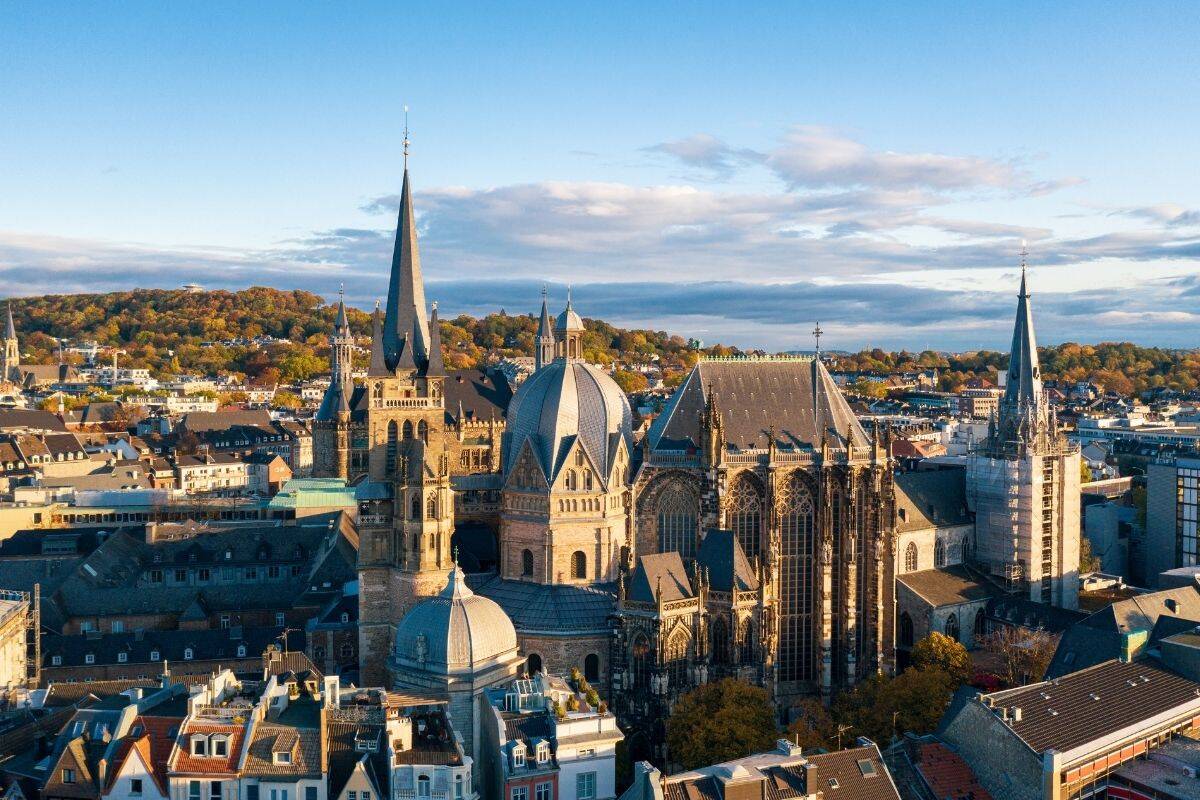
Once a Roman spa town renowned for its thermal springs, Aachen is still a hotspot for visitors seeking history and culture. Sitting at the crossroads of Germany, Belgium and the Netherlands, Aachen’s strategic position made it a key base during the Holy Roman Empire, with Charlemagne establishing the city as his royal residence in the 9th century. Get a feel for Aachen’s rich history at Aachen Cathedral, one of Europe’s oldest and home to Charlemagne’s remains. The 45-minute guided tour will help you make the most of your visit. Make time, too, to soak up the city’s wellness culture at Carolus Thermen with its famous rejuvenating geothermal waters (bring your own flip-flops and towel to avoid rental fees). For a true taste of Aachen, stop by the Mittelstraße food market to sample Aachener Printen, a type of local gingerbread that’s especially popular around the Christmas season.
Getting there: ICE and RE trains run regular daily services between Düsseldorf Hbf and Aachen Hbf, with journey times of around 1 hr 25 mins.
Schloss Burg
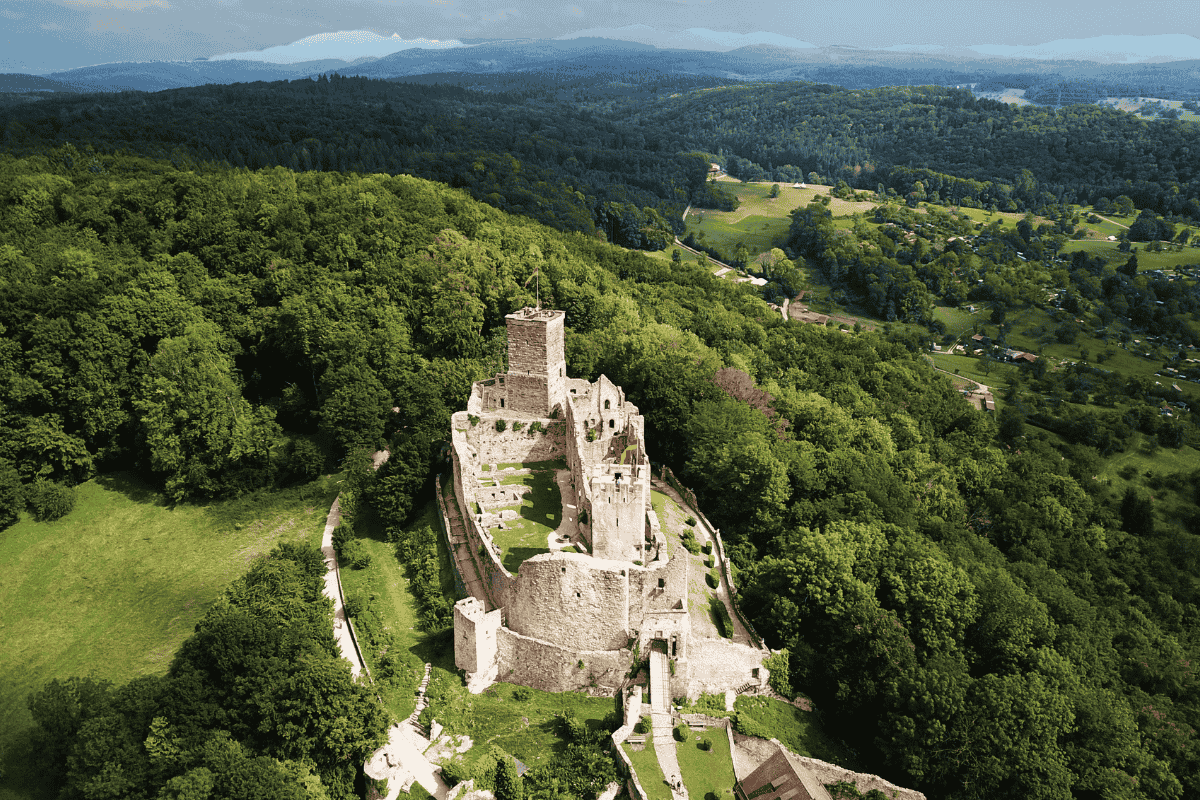
There’s no shortage of impressive castles in North Rhine-Westphalia, and Schloss Burg is one of the area’s finest. A restored medieval castle perched above the Wupper Valley, it offers a fascinating glimpse into the 12th century, as well as being a launchpad for hikes around the Bergisches Land’s dense forests and lush valleys. Once you’ve worked up an appetite from all that exploring, take the cable car down to the village of Unterburg, where you’ll find cafes serving up regional Bergische waffles, traditionally served with warm cherries and cream.
Getting there: To reach Schloss Burg from Düsseldorf, take a Regional Express (RE) train to Solingen Hbf (30-60 mins). From there, catch a bus to Unterburg, the village at the foot of the castle. You can then either walk or take the cable car up to visit Schloss Burg.
Bonn
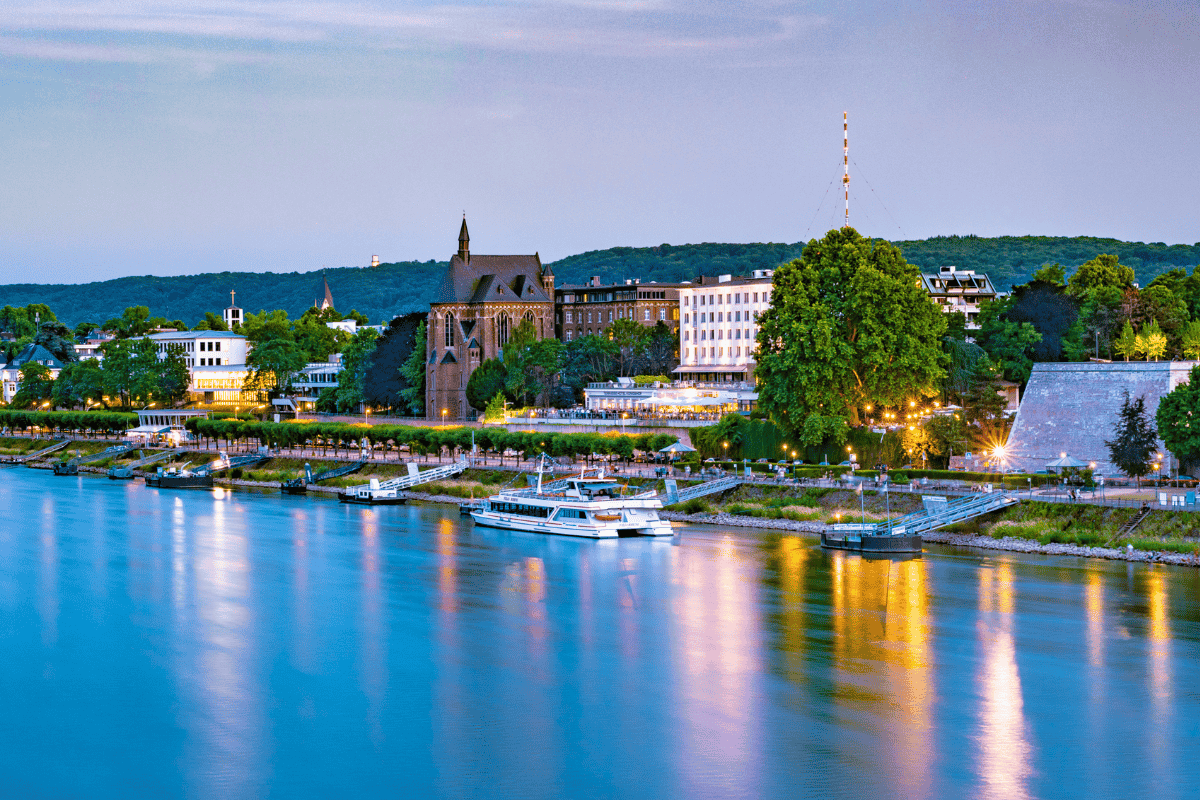
Famous for being the birthplace of Ludwig van Beethoven, Bonn hits all the right notes as a culture-filled day trip from Düsseldorf. Visit Beethoven-Haus memorial and museum to learn all about the great classical composer, and tap into more of the city’s cultural repertoire along Bonn’s Museum Mile. This stretch is home to five major institutions, including the Bonn Museum of Modern Art (Kunstmuseum Bonn), the Haus der Geschichte, the Bundeskunsthalle, the Museum König and the Deutsches Museum Bonn, each offering world-class collections and rotating international exhibitions.
If natural pursuits are more your tempo, head over to Rheinaue Leisure Park with its boating lake and walking paths. It also hosts a huge flea market every third Saturday of the month between April and October. Visiting in spring? Don’t miss the cherry blossom tunnel along Heerstrasse in Bonn’s Old Town, best seen between late March and late April.
Getting there: Regional Express (RE) and Intercity (IC) trains run regularly throughout the day between Düsseldorf Hbf and Bonn Hbf, with a journey time of 50 mins to 1 hr 10 mins.
Koblenz
Places to visit near Düsseldorf by train don’t come much more scenic than Koblenz. Sitting at the confluence of the Rhine and Moselle rivers, the city’s surrounding landscape is a stunning patchwork of vineyards, forests and hilltop castles. Your first point of call should be the Deutsches Eck (German Corner), where a towering statue of Emperor Wilhelm I overlooks the meeting point of the two rivers. From there, take the cable car up over the Rhine to Ehrenbreitstein Fortress for panoramic city views. Once you’ve taken the cable car back down, the Old Town is just a short walk away with its picturesque squares, hidden courtyards and cosy wine taverns offering local Rieslings. Koblenz is also the gateway to the romantic Upper Middle Rhine Valley, famous for its castles and cliffs. If time allows, hop on a Rhine river cruise to explore the area, or board a regional train heading south toward Bingen or Mainz. Running right along the riverbank, it’s one of Germany’s most scenic rail journeys.
Getting there: Direct RE and Intercity IC trains run multiple times a day between Düsseldorf Hbf and Koblenz. The fastest journey time is around 1 hr 25 mins.
Venlo and Maasduinen National Park
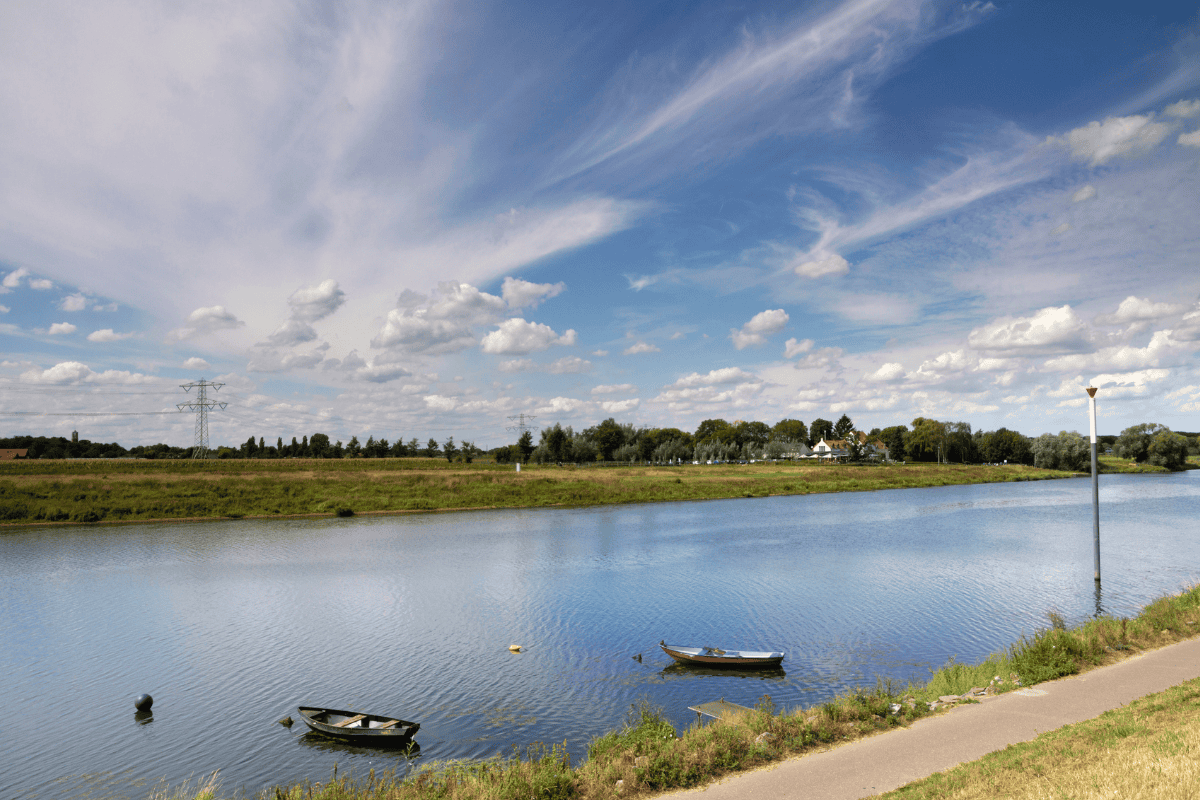
Düsseldorf isn’t just a great base for German day trips, it’s a convenient springboard for international discoveries too. Just over the border in the Netherlands, the compact riverside city of Venlo invites you to enjoy its historic centre and immerse yourself in local Dutch life. Visit the striking 16th-century Stadhuis (town hall) and stop by a café in the Markt square for a slice of traditional Limburgse vlaai, a sweet pie usually filled with fruit or rice pudding. Venlo’s real draw, however, is its proximity to De Maasduinen National Park, a paradise for nature lovers with its unique stretch of dunes, heathland and pine forest. It’s a favourite with hikers and cyclists, especially in spring and early autumn when the trails are uncrowded and the landscape comes alive with wildflowers and warm golden light.
Getting there: Direct RE trains from Düsseldorf Hbf to Venlo run hourly, with a journey time of around 1 hr 15 mins. Travellers must carry a valid ID or passport when crossing between Germany and the Netherlands. Random spot checks do occur, and in Germany it is a legal requirement to have identification on you at all times.
To reach De Maasduinen National Park, take a local Arriva bus (line 83) from Venlo to Well. The journey is roughly 40-60 mins.
More North Rhine-Westphalia travel inspiration
For more itinerary ideas beyond Düsseldorf, NRW Tourism has mapped out 15 themed rail routes across North Rhine-Westphalia – and you can book every leg right here on Rail Europe:
- Tour of the Future: modern architecture and cutting-edge culture between Düsseldorf, Cologne and Bonn.
- Art Express Treasure Hunt: track down public-art hotspots from Düsseldorf to Dortmund.
- From Castle to Castle: hop between Baroque palaces and riverside fortresses, starting at Benrath Palace.
Compare times, prices and classes using our booking widget right here on this page. Book in a few clicks and turn Düsseldorf into your launch pad for North Rhine-Westphalia adventures.
Travel planning tips
With its central location and excellent rail connections, Düsseldorf is an ideal base for exploring both Germany and neighbouring countries by train. From cultural cities to picturesque countryside escapes and cross-border excursions, you can organise a wide variety of day trips from Dusseldorf by train quickly and easily with Rail Europe.
Use Rail Europe to compare routes, times and prices across Germany’s extensive rail network, including high-speed trains from Düsseldorf and regional routes that take in plenty of scenery along the way.
Booking your tickets in advance is always a smart move, especially for longer or international routes, as this can help you secure better prices and ensure seat availability. And, with instant e-tickets, there’s no need to stand in queues for local ticket machines or worry about keeping track of all your paper tickets. You can just download your e-ticket to your phone, scan and go. This is particularly useful when hopping on regional trains where platforms can get busy, especially on weekends and during holidays.
If you’re planning several Düsseldorf train day trips during your stay, it’s also worth looking into a Eurail or Interrail Germany Pass, which offers unlimited travel within Germany on consecutive or flexible days, including on ICE and Intercity trains. If you’re keen to explore further afield, including taking day trips to the Netherlands or Belgium, the Eurail Global Pass includes cross-border routes and covers train travel in over 30 European countries. Both passes are available through Rail Europe and are of great value if you’re planning a multi-journey itinerary.
General advice for train travel in Germany:
- Trains tend to be punctual, so arrive at the platform at least 30 mins early to avoid missing your connection.
- On ICE and IC trains, reserving a seat isn’t required, but highly recommended on longer trips, during holidays or peak hours. For short regional journeys, seating is first-come, first-served.
- Validate paper tickets before boarding by stamping them at the machines on the platform.
- ICE and IC trains often have a bistro car, but RE trains usually don’t, so bring snacks for longer regional journeys.
With so many incredible destinations just a short train ride away, Düsseldorf is the perfect jumping-off point for exploring Germany – and the rest of Europe – by train. Whether you're after culture, nature or a spontaneous cross-border adventure, Rail Europe makes planning it all as easy as eins, zwei, drei. Start browsing routes, compare fares and book your train trips from Düsseldorf today.
You may also enjoy reading our blogs on the Best places to visit in Germany by train, German Christmas markets by train and taking a Rhine Valley rail trip.
Powered by Froala Editor