


Winter rail journeys from Italy to Switzerland that stick the landing
Winter travel across the Alps can be simple. From Milan to Switzerland, trains provide a calm, reliable way to reach alpine towns and winter bases.
Winter travel between Italy and Switzerland brings a different set of challenges. Snowfall, mountain conditions, busy airports and crowded roads can quickly turn a simple trip into a stressful one. That is exactly why train travel is the smartest (and most stunning) way to cross the Alps in winter.
From Northern Italy to the Swiss mountains, rail routes are designed for winter conditions. They stay reliable when roads slow down, and they keep travellers moving smoothly through some of Europe’s most dramatic landscapes.
Here is how to win at winter travel from Italy to Switzerland by rail, and why trains outperform every other option this season.
Why winter travel favors trains
Winter exposes every weak point in a journey. Weather changes fast. Traffic builds early. Delays have a nasty ripple effect. Trains remove much of that friction. Think:
- City centre to city centre travel
- No mountain driving or winter road conditions
- Consistent schedules even in cold weather
- Plus you have space to remove those pesky extra winter layers and rest will you climb through the snow-dusted Alps
Instead of reacting to winter, rail travel works with it and gets you front row to the world’s most stunning winter wonderlands.
Why this winter matters
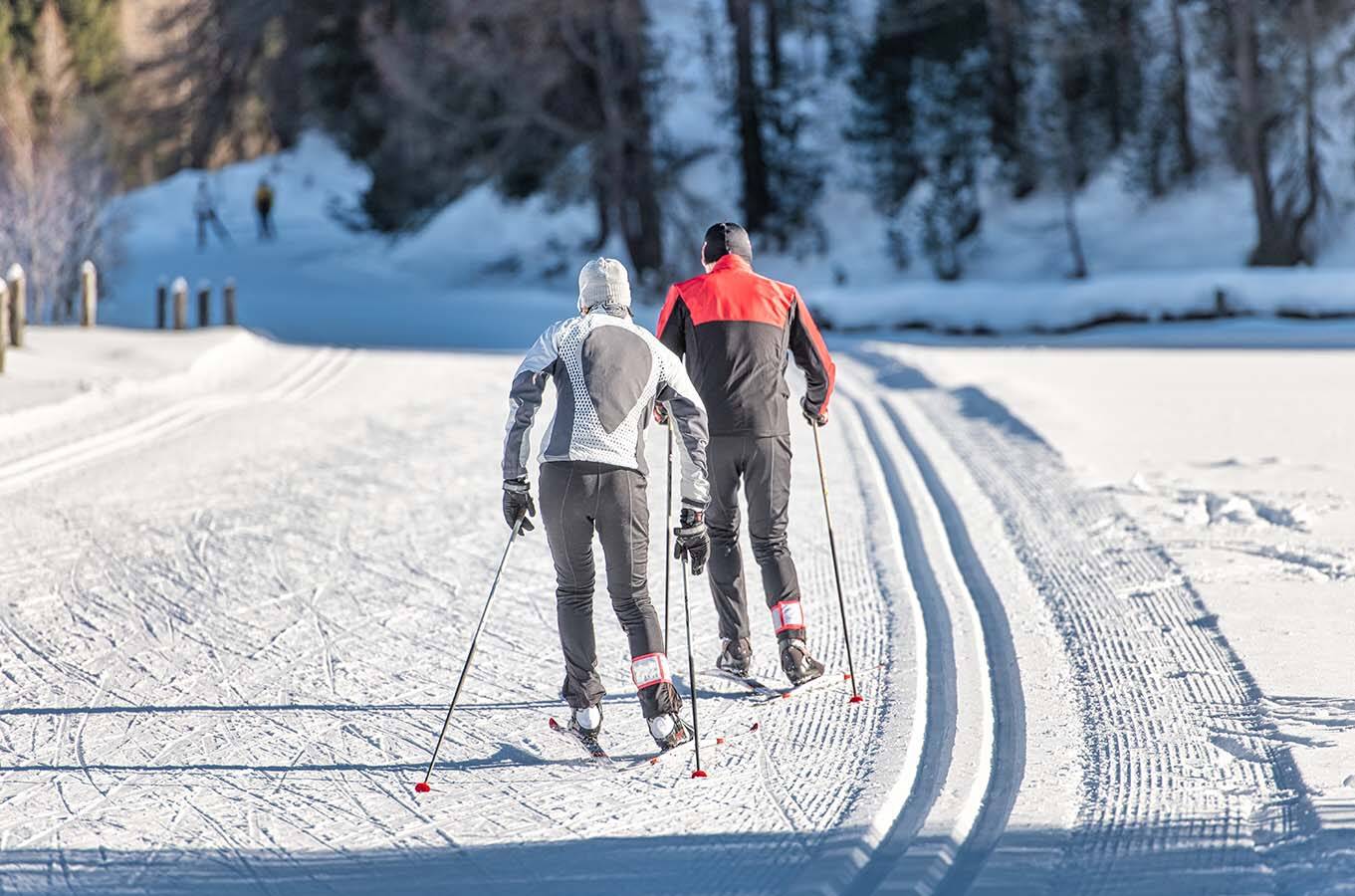
This season, attention is naturally drawn toward alpine regions. Winter sports, mountain travel and snowy landscapes are inspiring travelers to look beyond cities and toward higher ground. Many of those trips will extend well beyond winter itself. Rail routes that work now will continue to be useful long after the snow melts.
Choosing train travel this winter sets the tone for how you move through Europe year-round.
Milan, the gateway to winter rail travel
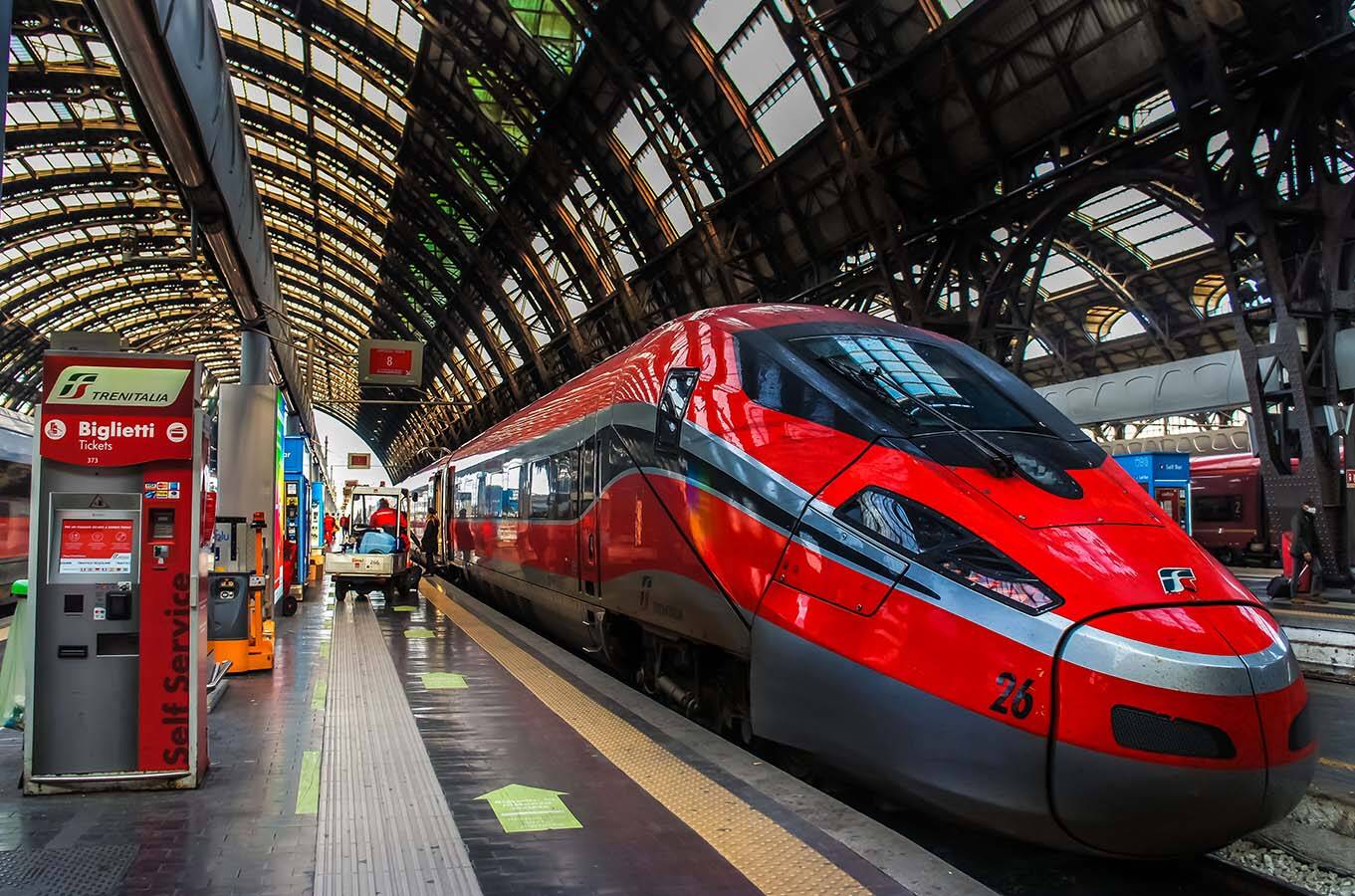
Milan is one of Europe’s most important rail hubs, and in winter, it shines. High-speed and international trains connect the city directly to Northern Italy, the Alps and Switzerland.
This makes Milan the ideal starting point for travellers heading toward winter destinations or alpine regions without needing a car.
Route 1: Milan to Tirano and the Alps
This season, attention is naturally drawn toward alpine regions. Winter sports, mountain travel and snowy landscapes are inspiring travelers to look beyond cities and toward higher ground. Many of those trips will extend well beyond winter itself. Rail routes that work now will continue to be useful long after the snow melts.
Choosing train travel this winter sets the tone for how you move through Europe year-round.
This is the kind of winter journey that eases you in. You board in Milan with a coffee and a plan, and somewhere along the way the scenery starts taking the lead.
Fields turn into foothills. Foothills turn into valleys. By the time you roll into Tirano, winter travel feels manageable again. You’re in a small alpine town where the station opens straight onto mountain air, local cafés and the sense that there’s no need to rush the next move.
Why this route works in winter:
- A smooth shift from city to mountains without the shock
- Arrival right where things start to feel alpine
- No driving required when conditions start to change
Route 2: Milan to Switzerland through Chur and St. Moritz
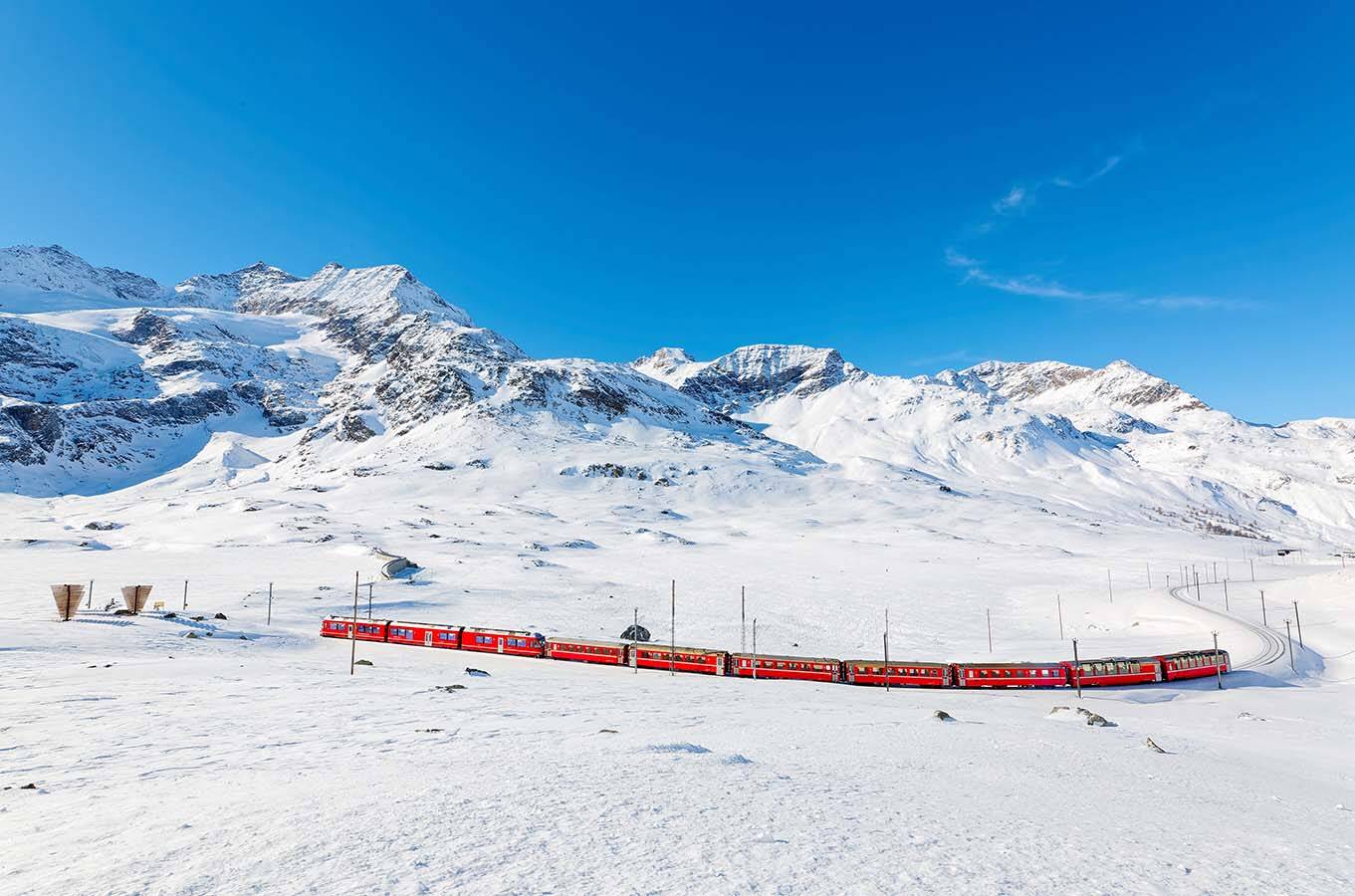
This is the route people picture when they think about winter rail travel. And honestly, it earns the reputation.
The train climbs steadily into Switzerland, doing exactly what you want it to do in winter: staying calm while the world outside gets more dramatic. Snow sticks around. Peaks move closer. You start checking the view more often than your phone.
Stopping in Chur puts you straight into a compact, walkable city that knows how to handle winter. Carry on to St. Moritz and you’re in a Hallmark film. Skis on shoulders. Frozen lakes. Big scenery that does all the talking.
Why this route works in winter:
- Rail built for alpine conditions, not fair weather
- Easy stops that make sense in winter
- A journey that feels steady all the way through
Route 3: Milan to alpine towns and winter bases
Not every winter trip needs a packed schedule. Sometimes you just want to land somewhere and let the day happen to you.
From Milan, trains connect easily to alpine towns where winter life is compact and close at hand. In places like Pontresina, the station puts you near valley walks, snow-covered trails and the kind of winter days that start outside and end somewhere warm.
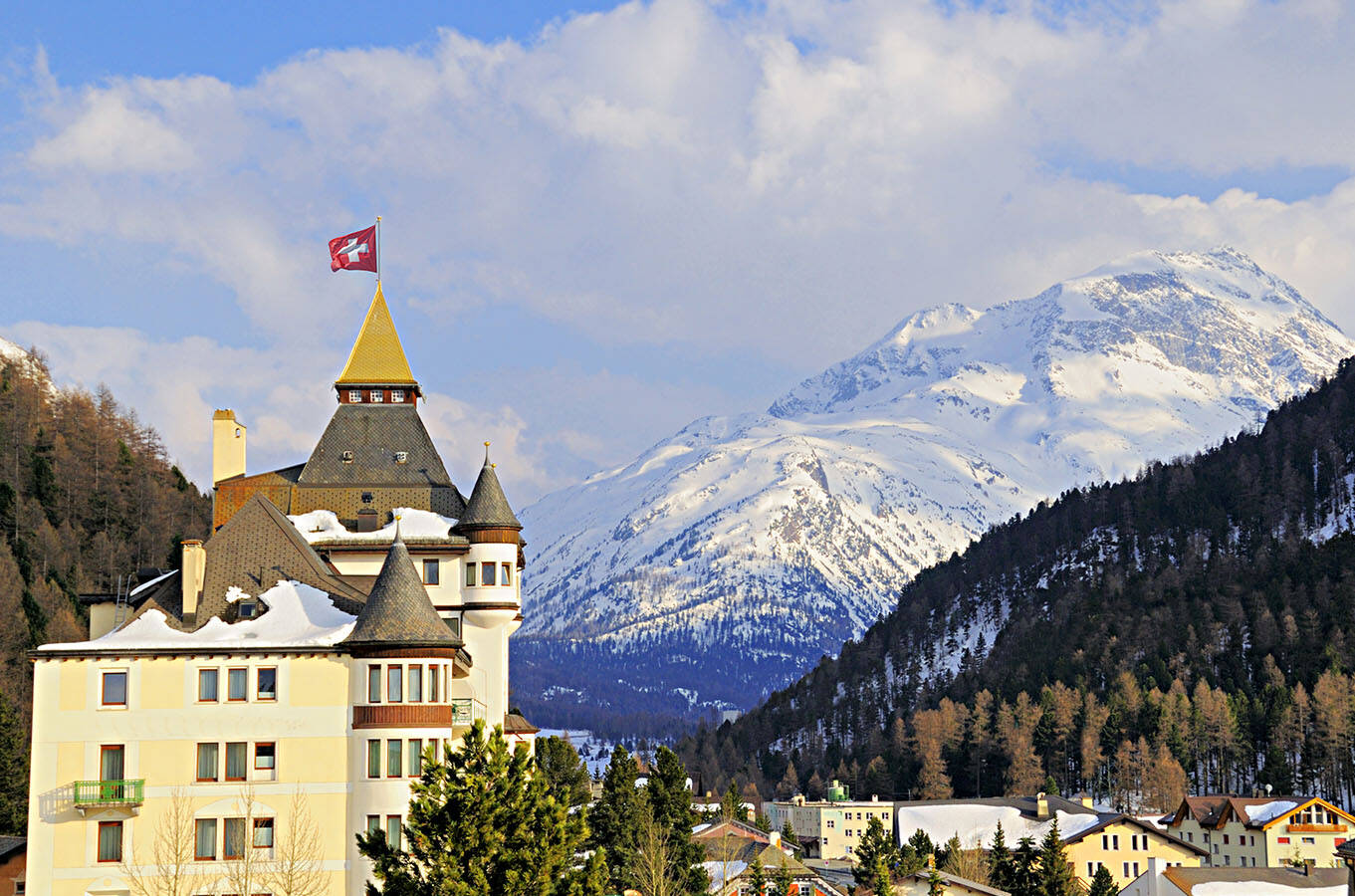
There’s no scramble to get moving once you arrive. No extra leg to deal with. You step off the train and you’re already where you need to be.
Why this route works in winter:
- Towns where everything is close together
- Fewer decisions once you arrive
- A journey that leaves you feeling human
Why trains outperform planes and cars in winter
During peak winter travel, trains stay consistent while other modes struggle. Onboard, you can move freely, warm up, rest and watch the landscape change outside. The journey becomes part of the experience rather than an obstacle. For winter travel across the Alps, this balance matters.
Travel like a pro this winter
Winning at winter travel does not mean rushing or pushing harder. It means choosing routes that are built for the season. Traveling by rail from Italy to Switzerland allows you to:
- Stay flexible in unpredictable weather
- Avoid unnecessary stress
- Arrive ready, not drained
Winter already demands focus. Your travel should support it.
Sticking the landing
From Italy to Switzerland, train travel is the most reliable way to move through winter. It is calm when things get busy. Controlled when conditions change. And built for the terrain it serves. That is how you win at winter travel. Now, go book your travel and take a bow! The world’s watching.
Powered by Froala Editor