
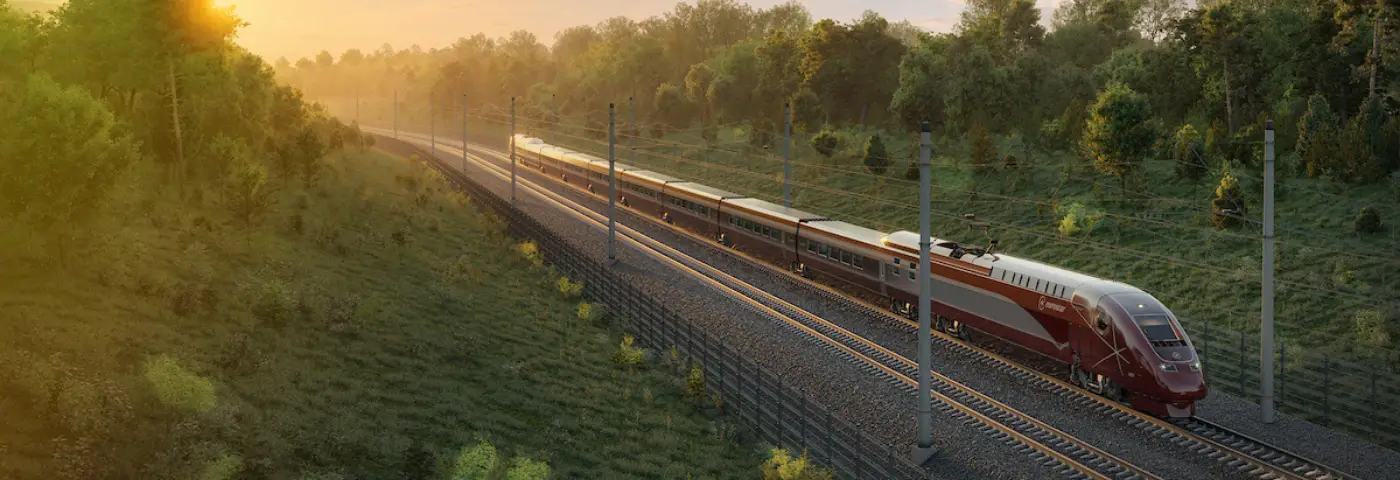


Europe's best season for trains is the one nobody books
Autumn is the part of the European year the railways were built for. The cities empty, the light goes long and low, and the stretches of line that are a hot, packed slog in August turn into the reason to go rather than the price of getting there. Think: the run along the Mediterranean. The terraces above Lake Geneva.
€25 to Brussels. €39 to Barcelona or Milan on the TGV. For six days, 9 to 14 September, Eurstar and SNCF discount at the same time, and then the two sales part company. Eurostar tickets are good from 23 September, while there is still autumn to spend. TRAINDAYS tickets cover 3 November to 12 December, the six weeks before Christmas. Book in the same week, but book knowing which of the two you are buying.
The offer at a glance
- Eurostar, Standard class only: €39 to London, €25 to Brussels, €32 to the Netherlands and Germany
- SNCF TRAINDAYS, international TGV routes: €39 in second class, or €49 in first, which is the same fare plus a €10 supplement
- Book between 9 and 14 September 2026
- Eurostar travel: 23 September to 16 December 2026
- SNCF TRAINDAYS travel: 3 November to 12 December 2026
- TRAINDAYS tickets are non-exchangeable and non-refundable. Eurostar Standard conditions are shown at booking. Numbers at each fare are limited in both sales.
This is the fourth edition of TRAINDAYS. SNCF Voyageurs runs it every year now and across everything it sells, so it has settled into the calendar as a fixture rather than a clearance. Eurostar has timed its own sale to land in the same six days, which is the part worth paying attention to: for one week the two operators that cover most of western Europe are discounted together.
Which Train takes you where
The two sales cover different maps, and knowing which is which saves you a lot of searching.
- Eurostar covers routes to London, to Brussels, and to the Netherlands and Germany. Standard class, and Standard class only.
- SNCF TRAINDAYS covers the international TGV routes out of France: TGV France Italie, TGV France Espagne, TGV France Luxembourg, TGV France Brussels, TGV Lyria into Switzerland, and the SNCF and DB co-operation into Germany.
Brussels is the only city in both, on two different windows.
Why go now
Milan, and the Alps that come with it
The TGV France Italie leaves Paris Gare de Lyon, runs south on the high-speed line and turns east at Chambéry into the Maurienne. At Modane it enters the Fréjus tunnel, dug between 1857 and 1871 and the first railway anyone drove under the Alps rather than over them. You come out at Bardonecchia. By late autumn there is snow on the peaks with the valley floor still green below, and the descent through Piedmont into Turin is the best hour of the day.
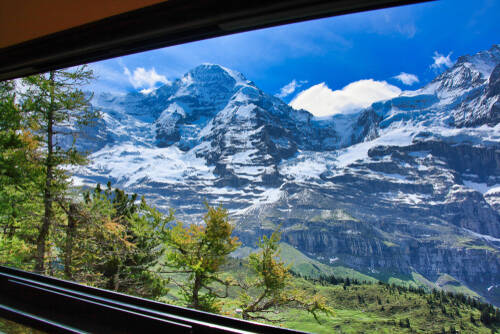
One thing the timetable will not tell you: in late November the light is gone by five, so an afternoon departure means crossing all of that in the dark. Take a morning train.
You arrive at Milano Porta Garibaldi, not Centrale SNCF moved its services across in 2011 and a lot of guidance has not caught up. Garibaldi is properly central, on metro lines 2 and 5, but Italian connections south and the trains for Lake Como go from Centrale, one stop away.
The reason to be there inside this window is 7 December, the feast of Sant'Ambrogio. Milan takes its patron saint seriously: the Oh bej! Oh bej! market fills the squares around the Castello Sforzesco, and La Scala opens its opera season the same evening, which is the most watched night in Italian culture. The window closes on the 12th, so it just fits.
Barcelona, the first quiet season since the towers were finished
The Sagrada Família is finished. The Tower of Jesus Christ was topped out in February and the basilica was inaugurated on 10 June, the centenary of Gaudí's death, with Pope Leo XIV presiding. At 172.5 metres it is now the tallest church in the world, and Barcelona holds the title of World Capital of Architecture for 2026. Autumn is the first run of ordinary weeks the city has had since.
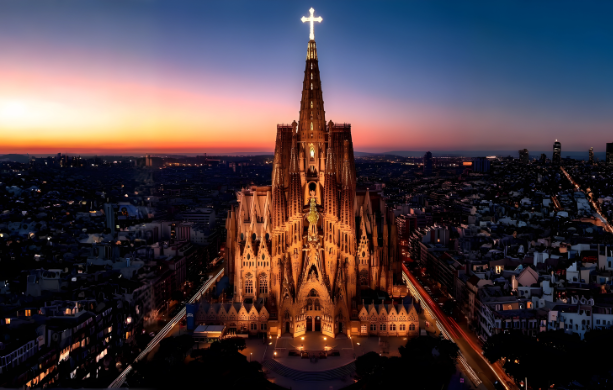
Ordinary is relative in a completion year, so book the timed entry before you book the train, not after. If you are there on 8 December, there is a Mass for the Immaculate Conception inside it.
Getting there is most of the pleasure. The TGV France Espagne runs down the Rhône, and then between Montpellier and Sète the line drops onto a sandbar with the Étang de Thau on one side and the Mediterranean on the other, close enough that water is the only thing out of either window. After Perpignan it goes under the Pyrenees through the Perthus tunnel and comes out in Catalonia. Barcelona Sants is on metro lines 3 and 5, about fifteen minutes from the Gothic Quarter.
Switzerland, for the first snow
TGV Lyria runs from Paris Gare de Lyon to Geneva in about three hours ten, Lausanne in three forty and Zurich in a little over four. Geneva Cornavin sits in the middle of town, ten minutes from the lake on foot.
Montreux Noël takes over the lakefront from 20 November to 24 December, so the TRAINDAYS window covers three weeks of it. Most people take the direct train from Lausanne and miss the point of the journey. The line runs above the water through the Lavaux terraces, dry-stone walls and vines worked since the twelfth century and now a UNESCO site, and by late November they have turned copper. Twenty minutes, and the best twenty minutes on the lake.
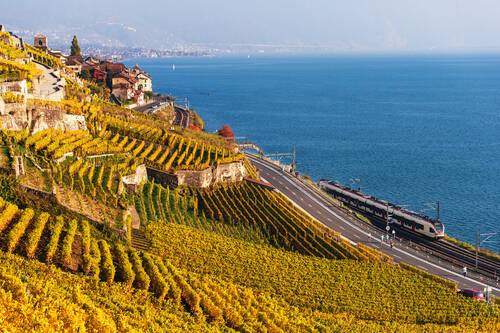
Château de Chillon is a short hop further along the shore. Above the town, Santa's workshop sits at Rochers-de-Naye, reached by cogwheel train from Montreux, which is a ridiculous and entirely justified way to spend an afternoon. This is also the gap in the Swiss year when the markets are open but the ski season has not started, so the trains are quiet and the hotels have not moved to winter rates.
Amsterdam and Brussels, the short version
Not every trip needs to be a week. Brussels is the cheapest Journey in either sale at €25, and the only city both of them reach. Winter Wonders takes the Grand-Place and the centre from 27 November to 3 January, and the Eurostar window runs to 16 December, so the sale covers its first three weeks. If you would rather have the city before the chalets go up, that same window opens on 23 September.
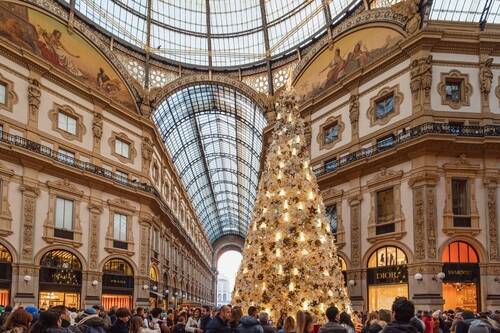
Belgian November is wet and Brussels is built for it. The Galeries Royales Saint-Hubert opened in 1847, among the first glass-roofed arcades in Europe and still the most civilised place in the city to wait out an hour of rain. Sinterklaas on 6 December is a bigger occasion here than in most countries that only keep the 25th.
Amsterdam Centraal is a little over three hours from Paris on the same sale, at the €32 Netherlands and Germany fare.
A trip the sale makes possible
If you want to use both sales in one journey, the overlap in the travel windows is 3 November to 12 December. Something like this:
- Day 1: Paris to Brussels by Eurostar, one hour twenty. An afternoon and evening in the city.
- Day 2: Brussels to Amsterdam Centraal, about two hours. Stay the night.
- Day 3: Amsterdam back to Paris, direct, a little over three hours.
- Day 4: Paris to Milan on the TGV France Italie, through the Fréjus tunnel and down into Piedmont.
- Days 5 and 6: Milan, with a day out to Lake Como — trains from Centrale, so allow the metro hop from Garibaldi.
- Then home the way you came, or on to Florence or Rome from Milano Centrale.
What we would tell a friend before they book
A few things that are easy to get wrong, from people who book these trains every day.
- Seat reservations are built into TGV and Eurostar tickets. You cannot travel without one, and you cannot turn up and take the next train, so the time on your ticket is the train you are on.
- The Eurostar fares in this sale are Standard class and there is no buying up. That is a comfortable seat and your luggage, but no meal service. On TRAINDAYS routes first class is €10 more, which on a seven hour run to Milan is the easiest ten euros in the sale.
- Travelling to or from London, be at the gates an hour before departure, because border checks take what they take. Everywhere else in this sale, ten or fifteen minutes is plenty.
- Paris has no single central station and the two sales use different ones. Gare de Lyon for Italy, Spain and Switzerland. Gare du Nord for Eurostar. Gare de l'Est for Luxembourg. Allow half an hour and a metro ride between any two, more at rush hour.
- Your ticket is on your phone. Nothing to print, nothing to collect.
Before you book
- TRAINDAYS tickets are non-exchangeable and non-refundable, so book the date you mean. Eurostar's Standard conditions are shown at booking and are not always the same, so read them before you pay if your dates might move.
- Numbers at each fare are limited, and the cheapest seats go first on the popular routes.
- You will not see a crossed-out price or a promo badge, and there is no code to enter. The discounted fare is already applied in your search results.
- Book between 9 and 14 September. After that the fares revert.
- Travel windows can vary by route inside each sale. Check the dates shown for your own journey rather than assuming.
- The sale fare cannot be combined with another promotion, a discount code or a reduced fare.
The short version
Six days in September, and then it goes back to normal. Look at what €39 actually buys. It is a seat from Paris to Barcelona. It is also a morning down the Rhône, the hour where the line runs between the lagoon and the sea, and the Pyrenees passing underneath you.
Eurostar tickets are good from 23 September to 16 December. TRAINDAYS tickets from 3 November to 12 December. Both sales open on 9 September and close on the 14th. Work out which of those two autumns you are booking before you start searching. Search fares at raileurope
Powered by Froala Editor